
Yes, depression can cause memory problems. Many people living with depression report difficulty remembering information, concentrating on tasks, or staying mentally focused throughout the day. These cognitive symptoms are often referred to as “brain fog” and can significantly impact daily life, work performance, and relationships.
How Does Depression Affect Memory?
Depression can affect several cognitive functions, including attention, concentration, decision-making, and memory. When the brain is struggling with persistent sadness, stress, or emotional distress, it may become more difficult to process and store new information effectively.
People with depression may experience:
- Forgetting appointments or important dates
- Difficulty recalling conversations
- Trouble concentrating while reading or working
- Feeling mentally sluggish or distracted
- Challenges with decision-making
These symptoms can make it seem as though memory loss is occurring, even when the underlying issue is depression-related cognitive impairment.
Read More: Does trauma cause memory loss?
Why Does Depression Cause Memory Problems?
Several factors contribute to memory difficulties in people with depression, including:
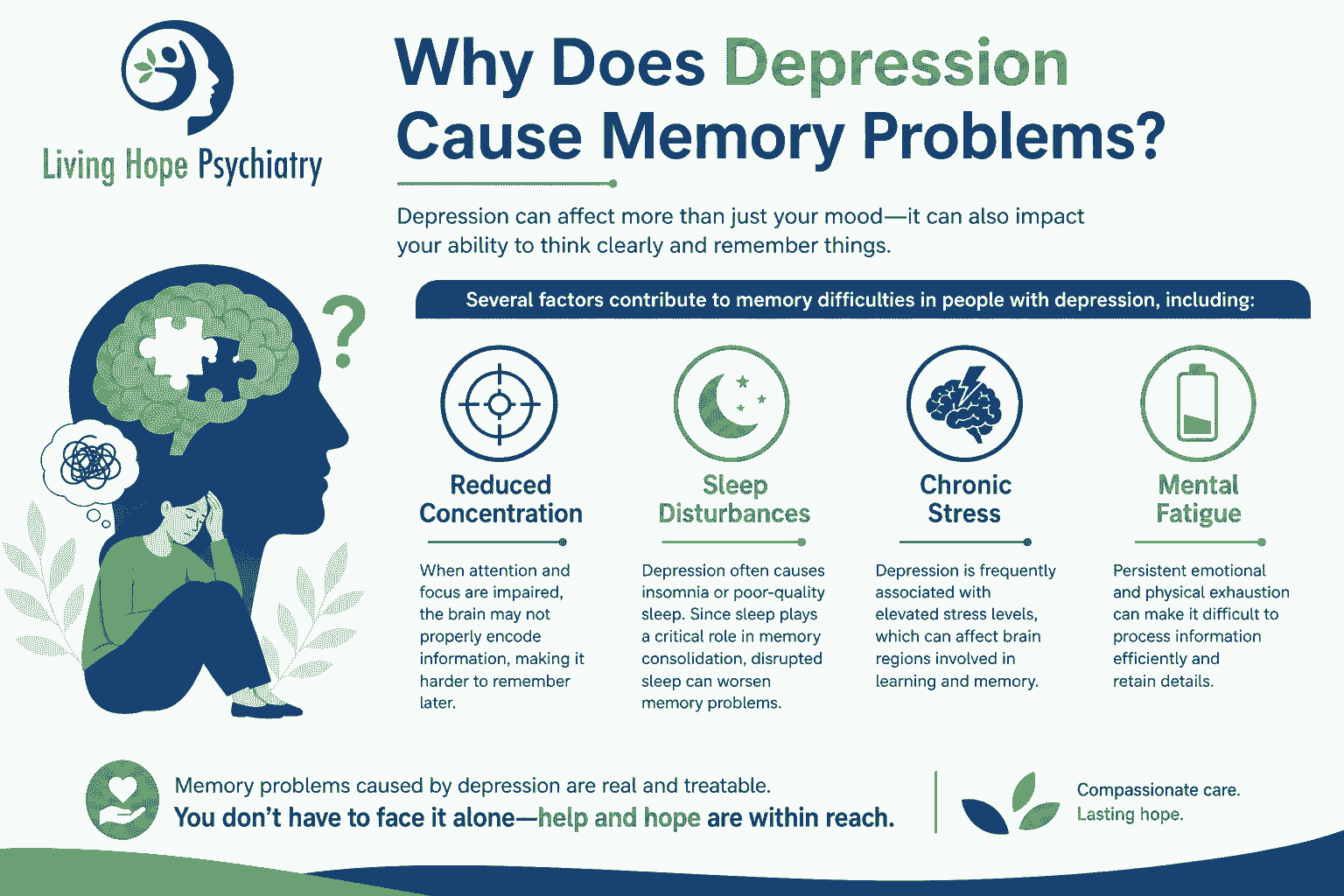
Reduced Concentration
When attention and focus are impaired, the brain may not properly encode information, making it harder to remember later.
Sleep Disturbances
Depression often causes insomnia or poor-quality sleep. Since sleep plays a critical role in memory consolidation, disrupted sleep can worsen memory problems.
Chronic Stress
Depression is frequently associated with elevated stress levels, which can affect brain regions involved in learning and memory.
Mental Fatigue
Persistent emotional and physical exhaustion can make it difficult to process information efficiently and retain details.
Read More: How can I get out of a deep depression?
Is Depression-Related Memory Loss Permanent?
In most cases, depression-related memory problems are not permanent. Many individuals experience significant improvements in concentration, focus, and memory once their depression is effectively treated. Therapy, medication management, lifestyle modifications, and stress reduction strategies can all support cognitive recovery.
However, ongoing or severe memory difficulties should be evaluated by a mental health professional to rule out other potential causes.
When Should You Seek Help?
If memory problems are interfering with your daily activities, relationships, work performance, or overall quality of life, it may be time to seek professional support. Early intervention can help address both depression symptoms and the cognitive challenges that often accompany them.
Get Professional Depression Treatment in Texas
If you or a loved one is experiencing depression, memory problems, difficulty concentrating, or other mental health concerns, Living Hope Psychiatry is here to help. Our experienced psychiatric providers offer comprehensive evaluations, personalized treatment plans, medication management, and compassionate mental health care for individuals across Texas.
Contact Living Hope Psychiatry today to schedule an appointment and take the first step toward improving your mental well-being, cognitive function, and overall quality of life.