Treatment-resistant depression (TRD) can feel overwhelming especially after trying multiple antidepressants without meaningful relief. If you or a loved one is searching for effective medicines for treatment-resistant depression, the good news is that clinical options have expanded significantly in recent years.
This guide explains what treatment-resistant depression is, the best evidence-based medications used today, how they work, and what to discuss with a psychiatrist before starting treatment. The goal is clarity, realism, and hope—without hype.
Understanding Treatment-Resistant Depression (TRD)
What Is Treatment-Resistant Depression?
Treatment-resistant depression is typically diagnosed when:
- At least two different antidepressants
- Taken at adequate dose and duration
- Fail to produce significant symptom improvement
- TRD affects an estimated 20–30% of people with major depressive disorder, making it a common and serious clinical challenge.
Why Standard Antidepressants Sometimes Fail
Depression is biologically complex. Common reasons medications don’t work include:
- Neurotransmitter imbalance beyond serotonin alone
- Genetic differences in drug metabolism
- Co-existing anxiety, bipolar disorder, or trauma
- Inflammatory or hormonal factors
This is why TRD treatment often requires advanced or combination approaches, not just “stronger” antidepressants.
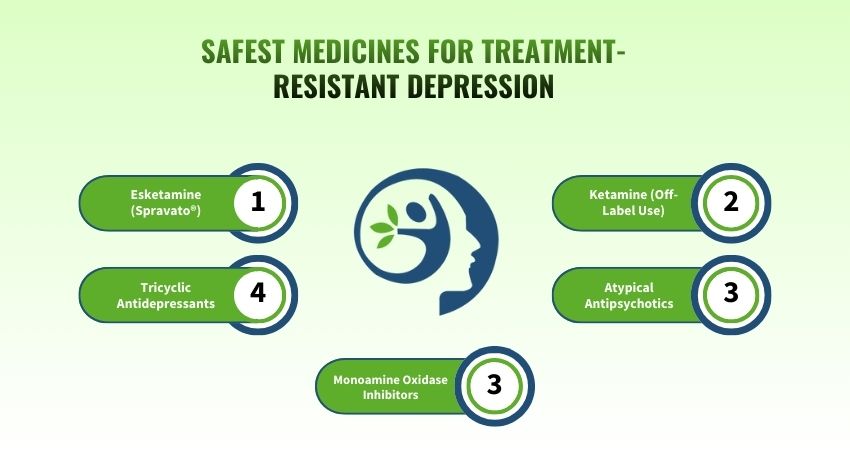
Safest Medicines for Treatment-Resistant Depression (Evidence-Based)
Below are the most effective medication options currently used for TRD, based on clinical evidence and psychiatric guidelines.
1. Esketamine (Spravato®)
Class: NMDA receptor antagonist
Administration: Nasal spray (in-clinic)
Why It Works
Esketamine targets the glutamate system, not serotonin—offering a completely different mechanism than traditional antidepressants. It can improve symptoms within hours or days, not weeks.
Key Benefits
- FDA-approved specifically for TRD
- Rapid reduction in suicidal ideation
- Used alongside an oral antidepressant
Considerations
- Must be administered in a certified clinic
- Temporary side effects: dissociation, dizziness, nausea
- Requires monitoring after each dose
2. Ketamine (Off-Label Use)
Class: NMDA receptor antagonist
Administration: IV infusion or oral (off-label)
Ketamine has been used for years in specialized clinics and is one of the fastest-acting treatments for severe TRD.
Best For
- Severe, long-standing depression
- Acute suicidal thoughts
- Patients who failed multiple medication classes
While not FDA-approved for depression, ketamine is supported by growing clinical evidence when administered by trained professionals.
3. Atypical Antipsychotics (As Adjunct Therapy)
These are not used alone but added to antidepressants to enhance response.
| Medication | Common Brand | Key Benefit |
|---|---|---|
| Aripiprazole | Abilify® | Strong evidence, well-tolerated |
| Brexpiprazole | Rexulti® | Lower risk of restlessness |
| Quetiapine XR | Seroquel XR® | Helpful for sleep + mood |
Why They Help
They affect dopamine and serotonin receptors, addressing mood regulation beyond standard antidepressants.
4. Tricyclic Antidepressants (TCAs)
Examples: Amitriptyline, Nortriptyline
Though older, TCAs can be effective when newer medications fail.
Pros
- Powerful antidepressant effect
- Useful in melancholic or severe depression
Cons
- More side effects
- Requires cardiac monitoring in some patients
5. Monoamine Oxidase Inhibitors (MAOIs)
Examples: Phenelzine, Tranylcypromine
MAOIs are often considered last-line medications, but they can be life-changing for some patients.
Best For
- Atypical depression
- TRD with anxiety or hypersomnia
Important Notes
- Strict dietary restrictions required
- Must be prescribed by experienced psychiatrists
6. Mood Stabilizers & Combination Therapy
In some TRD cases, especially when bipolar features are present:
- Lithium (strong evidence for suicide prevention)
- Lamotrigine
- Combination antidepressant strategies
These approaches are highly individualized and specialist-guided.
Non-Medication Treatments Often Combined with TRD Medicines
Medication alone isn’t always enough. High-success TRD plans often include:
- Cognitive Behavioral Therapy (CBT)
- Electroconvulsive Therapy (ECT)
- Transcranial Magnetic Stimulation (TMS)
- Psychedelic-assisted therapy (where legal and supervised)
Choosing the Right Medicine for TRD
There is no single “best” medication for treatment-resistant depression. The best option depends on:
- Prior medication history
- Symptom pattern
- Side-effect tolerance
- Medical conditions
- Access to specialized care
A psychiatrist experienced in TRD is essential for safe and effective treatment planning.
FAQs:
What is the most effective medication for treatment-resistant depression?
Esketamine and ketamine currently show the strongest evidence for rapid symptom relief, especially when standard antidepressants fail.
Is treatment-resistant depression curable?
TRD is treatable, not hopeless. Many patients achieve remission with advanced therapies or combination treatments.
How long does it take for TRD medications to work?
Traditional medications may take weeks, while ketamine-based treatments can work within hours to days.
Are TRD medications safe?
Yes—when prescribed and monitored by a qualified psychiatrist. Some require clinic-based administration for safety.
Can therapy help treatment-resistant depression?
Absolutely. Combining medication with psychotherapy significantly improves long-term outcomes.
Key Takeaways
- Treatment-resistant depression is common and medically recognized
- New medications like esketamine and ketamine are changing outcomes
- Adjunct therapies and combination treatments are often essential
- Personalized psychiatric care is critical for success
If you or a loved one is struggling with treatment-resistant depression, Living Hope Psychiatry offers compassionate, evidence-based mental health services across Texas. Our experienced providers specialize in personalized treatment plans, including advanced options for complex depression cases.
Schedule a confidential consultation with Living Hope Psychiatry today and take the next step toward relief, clarity, and lasting mental wellness.