Many people focus on physical health eating better, exercising, and avoiding harmful substances, but rarely stop to consider how everyday habits affect their mental health.
Small, repeated behaviors can quietly increase stress, anxiety, and even depression over time. The truth is, some habits feel normal or harmless, yet they may be taking a toll on your emotional well-being.
If you’ve been feeling overwhelmed, stuck, or mentally exhausted, one of these habits may be contributing.
Let’s explore seven common behaviors that could be harming your mental health and what you can do instead.
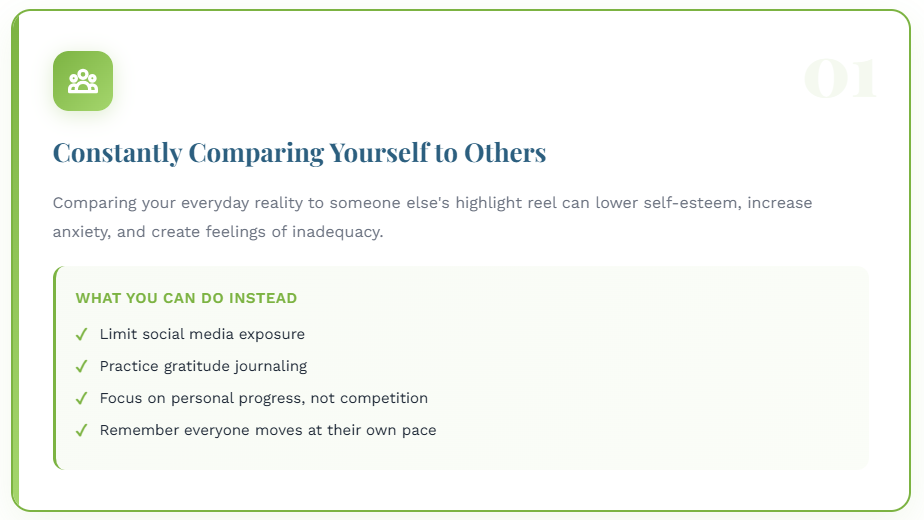
1. Constantly Comparing Yourself to Others
With social media and constant online exposure, comparison has become almost automatic.
You may find yourself thinking:
- “Why am I not as successful as them?”
- “Why don’t I look like that?”
- “Why can’t I be further in life?”
The problem is that we compare our everyday reality to someone else’s highlight reel.
Over time, this habit can:
- Lower self-esteem
- Increase anxiety
- Create feelings of inadequacy
- Contribute to depressive thoughts
What You Can Do Instead
- Limit social media exposure
- Practice gratitude journaling
- Focus on personal progress, not competition
- Remind yourself that everyone moves at a different pace
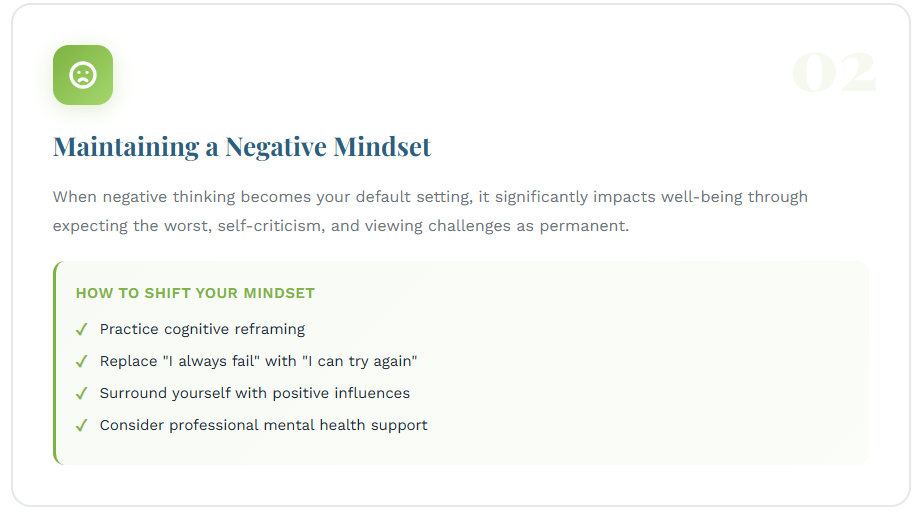
2. Maintaining a Negative Mindset
Everyone has negative thoughts occasionally. However, when negative thinking becomes your default setting, it can significantly impact your mental well-being.
A negative mindset may include:
- Expecting the worst
- Self-criticism
- Assuming failure
- Viewing challenges as permanent
Over time, this thinking pattern can increase stress and reduce resilience.
How to Shift Your Mindset
- Practice cognitive reframing (challenge negative thoughts)
- Replace “I always fail” with “This didn’t work, but I can try again.”
- Surround yourself with positive influences
- Consider speaking with a mental health professional
3. Avoiding Physical Exercise
Exercise is not just about physical fitness — it directly impacts brain chemistry.
Regular physical activity:
- Releases endorphins (natural mood boosters)
- Reduces stress hormones
- Improves sleep
- Increases self-confidence
Research consistently shows that physically active individuals report lower stress and anxiety levels.
Simple Ways to Start
- 20-minute daily walk
- Light stretching routine
- Yoga or home workouts
- Outdoor activities
Even small movement makes a difference.
4. Overthinking Everything
Overthinking often feels like problem-solving, but it usually turns into mental replaying, worst-case scenarios, and self-criticism.
Common signs include:
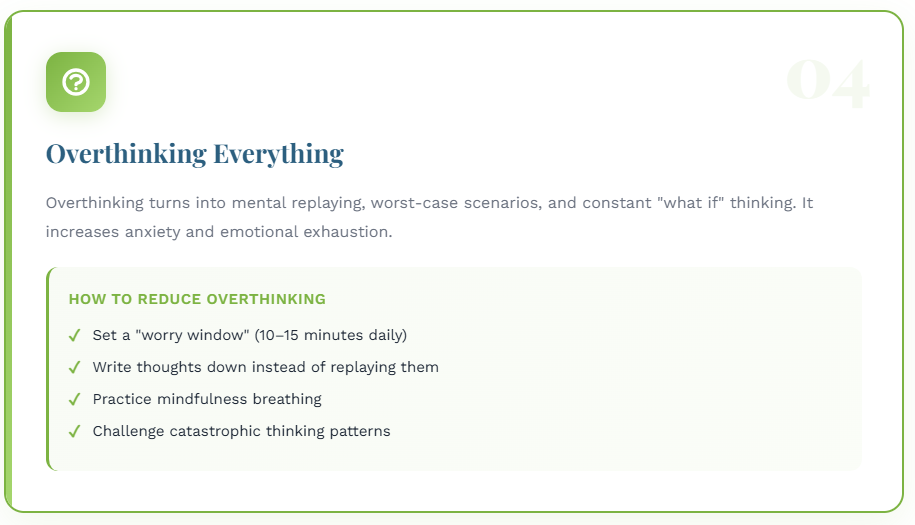
- Replaying conversations repeatedly
- Constant “what if” thinking
- Difficulty sleeping due to racing thoughts
- Analyzing small decisions excessively
Chronic overthinking increases anxiety and emotional exhaustion.
How to Reduce Overthinking
- Set a “worry window” (10–15 minutes a day)
- Write thoughts down instead of mentally replaying them
- Practice mindfulness breathing
- Challenge catastrophic thinking
If overthinking feels uncontrollable, professional support can help break the cycle.
5. Living in the Past
Reflecting on past experiences can be healthy — but staying emotionally stuck in regret, trauma, or missed opportunities can be harmful.
When someone constantly relives the past, they may experience:
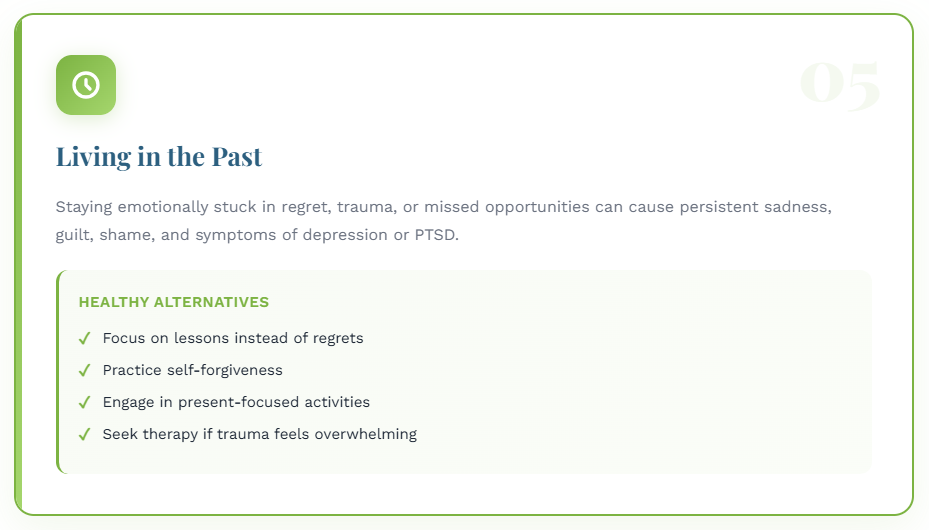
- Persistent sadness
- Guilt or shame
- Emotional numbness
- Symptoms of depression or PTSD
Letting go doesn’t mean forgetting — it means allowing yourself to move forward.
Healthy Alternatives
-
Focus on lessons instead of regrets
-
Practice self-forgiveness
-
Engage in present-focused activities
-
Seek therapy if past trauma feels overwhelming
6. Not Prioritizing Self-Care
Many people believe self-care is selfish — especially when balancing work, family, and responsibilities.
However, neglecting your own needs can lead to:
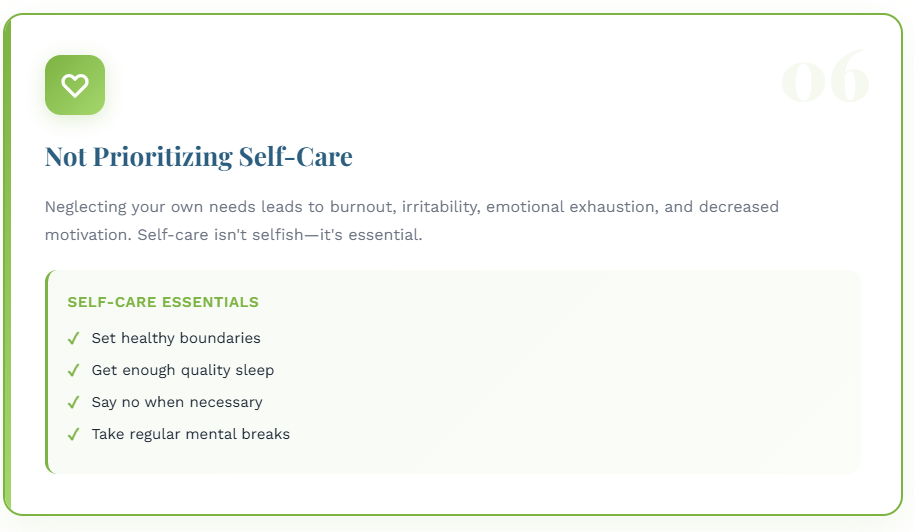
- Burnout
- Irritability
- Emotional exhaustion
- Decreased motivation
Self-care isn’t just about spa days. It includes:
- Setting boundaries
- Getting enough sleep
- Saying no when necessary
- Taking mental breaks
Without self-care, it becomes difficult to show up fully for others.
7. Mindless Internet and Social Media Use
Spending hours scrolling on your phone may seem harmless, but excessive screen time has been linked to:
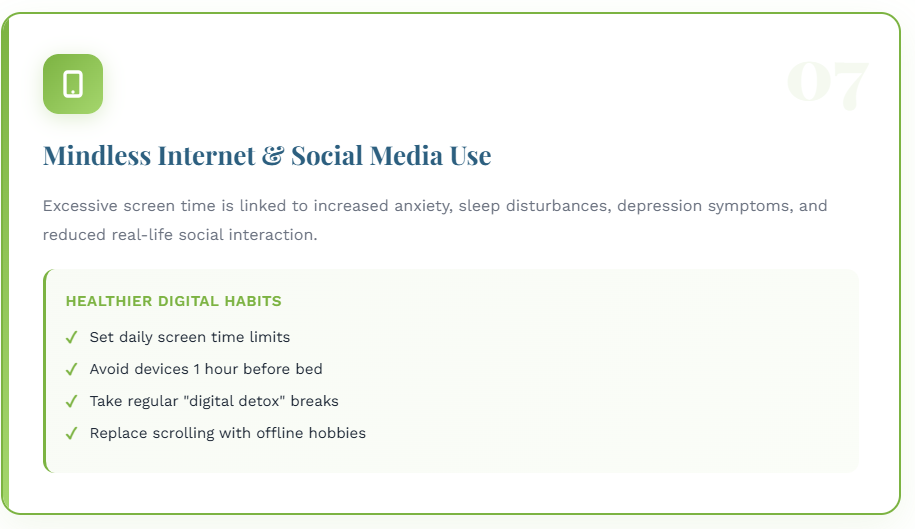
- Increased anxiety
- Sleep disturbances
- Depression symptoms
- Reduced real-life social interaction
Constant digital stimulation keeps the brain in a heightened state of alertness, making it harder to relax and unwind.
Healthier Digital Habits
- Set screen time limits
- Avoid devices 1 hour before bed
- Take regular “digital detox” breaks
- Replace scrolling with offline hobbies
If you are looking for a compassionate and experienced mental health psychiatrist in McKinney, Texas, Living Hope Psychiatry is here to support you. Our team provides personalized care to help individuals manage anxiety, depression, trauma, and other mental health concerns.
You don’t have to navigate these challenges alone.
Contact Living Hope Psychiatry today to schedule a consultation and take the first step toward a healthier, more balanced life.