Depression is not a single condition. It is an umbrella term for multiple mood disorders that affect how a person feels, thinks, and functions in daily life. Understanding the different types of depression helps individuals recognize symptoms early and seek appropriate mental health treatment.
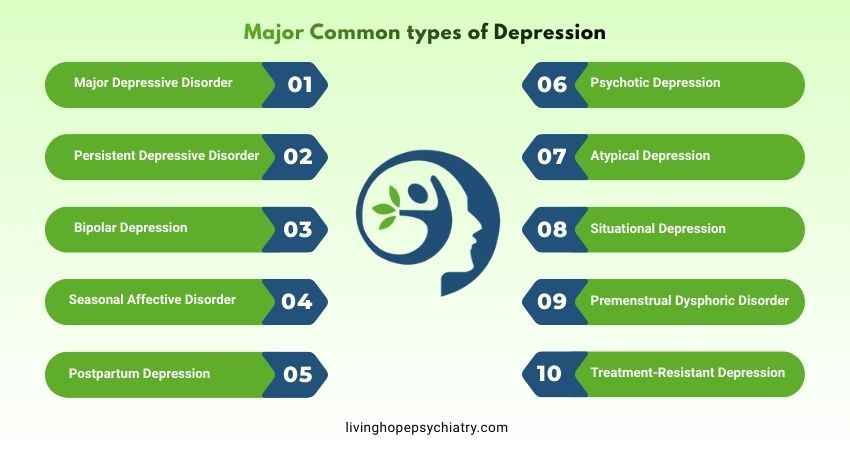
Major Common types of Depression
Below are the 10 most common types of depression, explained in detail.
1. Major Depressive Disorder (MDD)
Major Depressive Disorder, also called clinical depression, involves persistent feelings of sadness, hopelessness, fatigue, and loss of interest in activities once enjoyed. Symptoms typically last at least two weeks and may include sleep problems, appetite changes, poor concentration, and suicidal thoughts.
2. Persistent Depressive Disorder (Dysthymia)
Persistent Depressive Disorder is a long-term, chronic depression lasting two years or more. While symptoms may be milder than MDD, they are ongoing and can affect self-esteem, motivation, and relationships.
3. Bipolar Depression
Bipolar depression occurs in individuals diagnosed with Bipolar I or Bipolar II Disorder. Depressive episodes may look similar to major depression but alternate with periods of mania or hypomania, which include elevated mood, impulsivity, and high energy.
4. Seasonal Affective Disorder (SAD)
Seasonal Affective Disorder is a type of depression linked to changes in seasons, most commonly during fall and winter. Reduced sunlight can disrupt serotonin levels and circadian rhythms, leading to low mood, fatigue, and social withdrawal.
5. Postpartum Depression
Postpartum depression affects some individuals after childbirth and is more intense and long-lasting than the “baby blues.” Symptoms include overwhelming sadness, anxiety, emotional numbness, and difficulty bonding with the baby.
6. Psychotic Depression
Psychotic depression is a severe form of major depression that includes hallucinations, delusions, or paranoia. These symptoms are often related to feelings of guilt, worthlessness, or fear.
7. Atypical Depression
Atypical depression is marked by temporary mood improvement in positive situations, along with increased sleep, increased appetite, weight gain, and sensitivity to rejection. Despite the name, it is a common and well-recognized condition.
8. Situational Depression (Adjustment Disorder with Depressed Mood)
Situational depression develops after a specific life event, such as grief, trauma, divorce, or job loss. While symptoms resemble major depression, they are directly linked to an identifiable stressor.
9. Premenstrual Dysphoric Disorder (PMDD)
PMDD is a severe form of premenstrual syndrome that causes intense mood changes, depression, irritability, and anxiety in the days leading up to menstruation. Symptoms typically improve once menstruation begins.
10. Treatment-Resistant Depression
Treatment-resistant depression occurs when symptoms do not improve after trying two or more standard treatments, such as antidepressants or psychotherapy. Specialized treatment approaches may be required.
Each type of depression has different causes, risk factors, and treatment approaches. Proper diagnosis allows mental health professionals to create a personalized treatment plan, which may include therapy, medication, lifestyle changes, or integrated mental health care.
When to Seek Mental Health Support
If symptoms such as persistent sadness, lack of motivation, emotional numbness, or changes in sleep and appetite last more than two weeks, it’s important to consult a licensed mental health professional. Early intervention can significantly improve recovery outcomes.
Final Takeaway
Depression is complex, but it is also treatable. Recognizing the type of depression is the first step toward effective care, emotional well-being, and long-term mental health stability.
Living Hope Psychiatry, your trusted Mental Health & Psychiatrist in McKinney, provides compassionate care for anxiety, depression, PTSD, ADHD, and other mental health concerns. Our licensed psychiatrists and therapists create personalized treatment plans to help you regain balance and well-being.
Schedule your appointment today and start your journey toward a healthier mind.
FAQs:
1. What are the five major types of depression?
The five major types are:
- Major Depressive Disorder (MDD) – persistent sadness and loss of interest.
- Persistent Depressive Disorder (Dysthymia) – chronic, long-term low mood.
- Bipolar Depression – depressive episodes in bipolar disorder.
- Seasonal Affective Disorder (SAD) – depression triggered by seasonal changes.
- Postpartum Depression – depression after childbirth.
2. What is the hardest type of depression?
Treatment-resistant depression is often considered the hardest, as it does not improve after multiple therapies and may require specialized care.
3. What can be mistaken for depression?
Conditions like anxiety disorders, thyroid problems, chronic fatigue, grief, or medication side effects can mimic depression symptoms.
4. Does depression ever go away?
Yes. Many forms of depression improve with therapy, medication, lifestyle changes, or a combination of treatments, though some types may be chronic and need ongoing care.
5. What are the 3 C’s of depression?
The 3 C’s refer to common warning signs:
- Cognition – difficulty concentrating or thinking clearly.
- Clarity of mood – persistent sadness or hopelessness.
- Control – loss of motivation or feeling unable to manage daily life.