When depression does not improve after trying multiple treatments, it can feel discouraging and overwhelming. Treatment-resistant depression (TRD) affects a significant number of people and requires more advanced, carefully guided treatment options.
This article outlines the five most effective medicines commonly used for treatment-resistant depression, how they work, and who they may help.
Disclaimer: This content is for educational purposes only. Always consult a qualified mental health professional before starting or changing medication.
What Is Treatment-Resistant Depression?
Treatment-resistant depression is usually diagnosed when:
- At least two antidepressants
- Taken at appropriate doses
- For an adequate duration (6–8 weeks)
- Fail to produce meaningful symptom improvement
TRD does not mean depression is untreatable—it means a different approach is needed.
Best 5 Medicines for Treatment-Resistant Depression
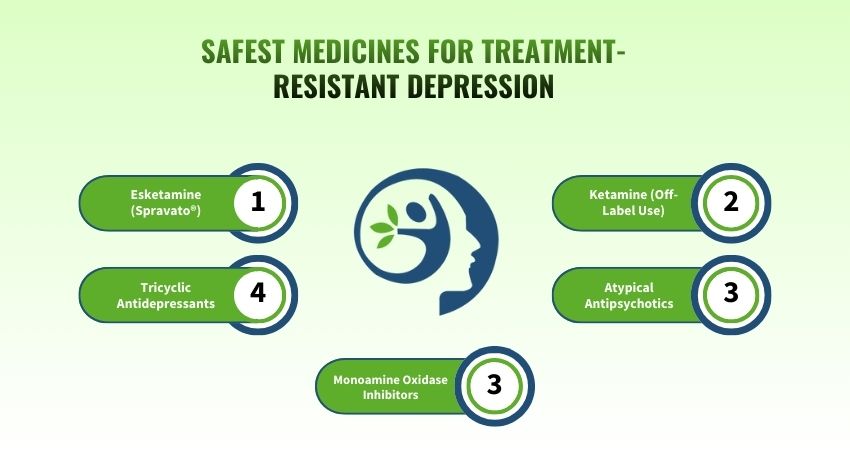
1. Esketamine (Spravato®)
Esketamine is one of the most significant breakthroughs in depression treatment.
How it works
- Targets the brain’s glutamate system
- Promotes rapid changes in neural connections
Why it’s effective
- Rapid symptom relief, sometimes within hours
- Specifically approved for treatment-resistant depression
- Helpful for severe and suicidal depression
Important notes
- Administered as a nasal spray in a certified clinic
- Requires post-dose monitoring
2. Lithium (Augmentation Therapy)
Lithium is a long-established medication with strong evidence in TRD.
Why it’s used
- Enhances the effect of antidepressants
- Reduces suicide risk
- Effective in chronic and severe depression
Considerations
- Requires regular blood monitoring
- Careful dose adjustment is essential
3. Atypical Antipsychotics (Adjunct Treatment)
Certain atypical antipsychotics are commonly used to boost antidepressant response.
| Medication | Common Brand Name |
|---|---|
| Aripiprazole | Abilify® |
| Quetiapine XR | Seroquel XR® |
| Brexpiprazole | Rexulti® |
Benefits
- Improve mood stability
- Help when antidepressants alone are not enough
Possible side effects
- Weight gain
- Sedation (varies by medication)
4. Tricyclic Antidepressants (TCAs)
TCAs are older antidepressants that remain effective for some people with TRD.
Common TCAs
- Amitriptyline
- Nortriptyline
- Imipramine
Why they’re used
- Strong antidepressant action
- Useful when newer medications fail
Limitations
- More side effects than modern antidepressants
- Require careful medical supervision
5. MAOIs (Monoamine Oxidase Inhibitors)
MAOIs are typically reserved for severe, hard-to-treat cases.
Examples
- Phenelzine
- Tranylcypromine
Why they matter
- Can be highly effective when other treatments fail
- Particularly helpful for atypical depression
Challenges
- Dietary restrictions
- Risk of drug interactions
- Must be prescribed by experienced specialists
Frequently Asked Questions
What is the most effective medicine for treatment-resistant depression?
There is no single best option for everyone. Esketamine and lithium have strong evidence, but treatment choice depends on individual factors.
How long do these medicines take to work?
Some treatments act quickly, while others require several weeks.
Can multiple medicines be taken together?
Yes. Combination therapy is common in treatment-resistant depression.
Is treatment-resistant depression permanent?
No. Many people improve with the right treatment plan.
Should I see a specialist for TRD?
Yes. A psychiatrist with experience in treatment-resistant depression is strongly recommended.
Summary
- Treatment-resistant depression requires specialized care
- Esketamine, lithium, atypical antipsychotics, TCAs, and MAOIs are among the most effective medication options
- The right treatment depends on individual symptoms and history
If you or a loved one is struggling with depression that hasn’t improved with standard treatments, specialized care can make a meaningful difference. Living Hope Psychiatry provides compassionate, evidence-based treatment for treatment-resistant depression in McKinney, Texas, offering personalized medication management and advanced care options tailored to your needs. Get Support