Eating disorders are complex mental health conditions that affect far more than eating habits. They can impact physical health, emotional well-being, relationships, work, and daily life. Although these conditions can be serious, they are highly treatable when identified early and managed with evidence-based care from qualified professionals.
If you’re searching for eating disorder treatment in McKinney, TX, you may be wondering what treatment actually involves, how long recovery takes, whether therapy works, or what kind of healthcare professionals you’ll meet during the process. These are common questions, and understanding what to expect can make taking the first step feel less overwhelming.
This guide explains the treatment process from diagnosis through recovery, discusses available therapies, outlines different levels of care, and provides practical information for individuals and families seeking compassionate, evidence-based support in McKinney.
Quick Answer
Eating disorder treatment in McKinney, TX typically includes a comprehensive evaluation, medical monitoring, psychotherapy, nutritional counseling, family support when appropriate, and individualized treatment planning. The right approach depends on the type of eating disorder, symptom severity, medical stability, and each person’s physical and emotional needs.
What Is an Eating Disorder?
An eating disorder is a mental health condition characterized by persistent disturbances in eating behaviors, body image, or weight-related thoughts that negatively affect physical health, emotional well-being, and daily functioning.
Eating disorders are not lifestyle choices or simply unhealthy eating habits. They involve complex interactions among genetics, brain function, emotional health, personality traits, life experiences, and environmental influences.
Without treatment, eating disorders can lead to serious complications involving the heart, digestive system, bones, hormones, and mental health. Early intervention significantly improves long-term recovery outcomes.
Common Types of Eating Disorders
Understanding the specific diagnosis helps healthcare providers develop the most effective treatment plan.
| Eating Disorder | Key Characteristics | Common Treatment Focus |
|---|---|---|
| Anorexia Nervosa | Severe food restriction, intense fear of weight gain, significantly low body weight | Medical stabilization, nutritional rehabilitation, psychotherapy |
| Bulimia Nervosa | Episodes of binge eating followed by compensatory behaviors such as vomiting, fasting, or excessive exercise | Cognitive Behavioral Therapy, nutrition counseling, medical monitoring |
| Binge Eating Disorder (BED) | Recurrent binge eating without regular purging behaviors | CBT, emotional regulation, nutrition therapy |
| Avoidant/Restrictive Food Intake Disorder (ARFID) | Restricted food intake unrelated to body image concerns | Behavioral therapy, nutritional support, gradual food exposure |
| Other Specified Feeding or Eating Disorder (OSFED) | Clinically significant symptoms that don’t meet full criteria for another eating disorder | Individualized treatment based on symptoms |
Signs You Should Seek Professional Help
Many people delay treatment because they assume their symptoms are “not serious enough.” However, early intervention often leads to better recovery outcomes.
Consider seeking professional evaluation if you notice:
- Persistent restriction of food intake
- Frequent binge eating episodes
- Self-induced vomiting
- Excessive exercise despite illness or injury
- Extreme concern about body weight or shape
- Rapid weight loss or weight fluctuations
- Skipping meals regularly
- Avoiding social situations involving food
- Obsessive calorie counting
- Frequent dizziness or fainting
- Fatigue or low energy
- Anxiety surrounding meals
- Loss of menstrual periods
- Difficulty concentrating
Family members may also notice mood changes, withdrawal, irritability, or secretive eating behaviors before the individual recognizes the problem.
What Causes Eating Disorders?
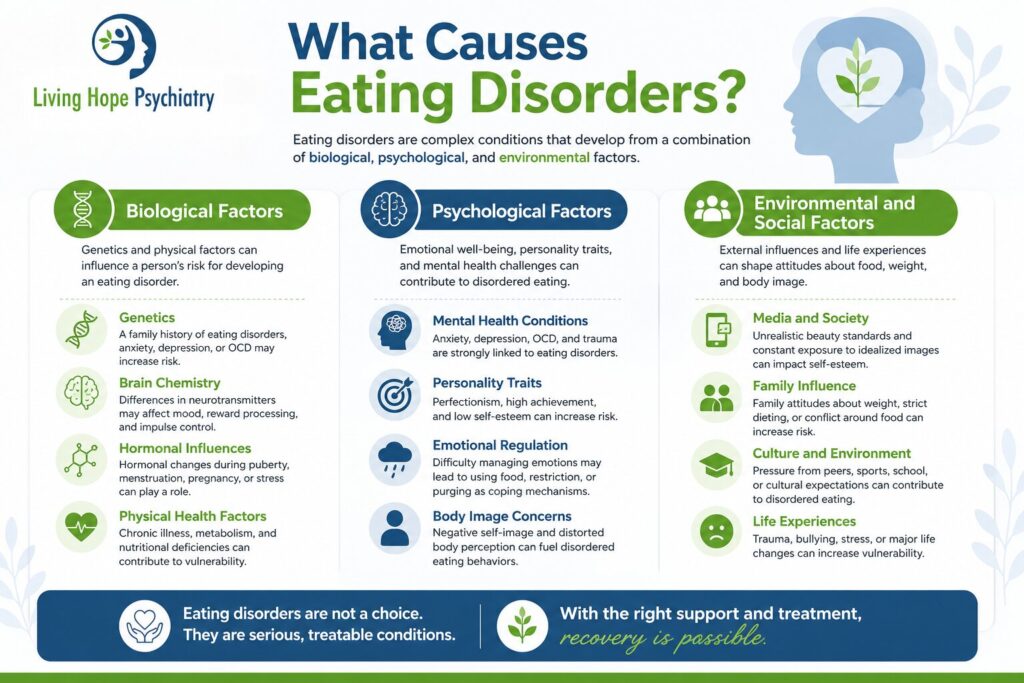
There is rarely one single cause. Most eating disorders develop through a combination of biological, psychological, and environmental factors.
Biological Factors
Research suggests that genetics contribute significantly to eating disorder risk. Individuals with close relatives who have eating disorders, anxiety disorders, obsessive-compulsive disorder, or depression may have an increased likelihood of developing similar conditions.
Brain chemistry, hormonal regulation, and differences in reward processing may also influence eating behaviors.
Psychological Factors
Several mental health conditions commonly occur alongside eating disorders, including:
- Anxiety disorders
- Depression
- Obsessive-compulsive traits
- Perfectionism
- Low self-esteem
- Trauma-related disorders
Many individuals use food restriction, binge eating, or purging behaviors as unhealthy coping mechanisms for emotional distress.
Environmental and Social Factors
Environmental influences can contribute, although they rarely act alone.
Examples include:
- Weight stigma
- Bullying
- Social media pressure
- Athletic or performance expectations
- Family conflict
- Major life changes
- Chronic stress
- Trauma
Recognizing these contributing factors helps clinicians create individualized treatment plans rather than focusing only on eating behaviors.
What to Expect During Your First Appointment
One of the biggest concerns people have is knowing what happens during the initial evaluation.
The first appointment is designed to understand your overall health, not to judge your eating habits or force immediate changes.
A comprehensive assessment often includes:
Medical History
Your provider may ask about:
- Current symptoms
- Weight history
- Eating patterns
- Exercise habits
- Sleep quality
- Menstrual history (when applicable)
- Previous treatments
- Medical conditions
- Medications
- Family history
Mental Health Evaluation
Because eating disorders often occur alongside other mental health conditions, providers typically assess:
- Anxiety
- Depression
- Stress
- Trauma history
- Obsessive thoughts
- Body image concerns
- Emotional regulation
- Daily functioning
Physical Assessment
Depending on symptoms, healthcare providers may recommend:
- Physical examination
- Vital signs
- Blood tests
- Electrolyte evaluation
- Heart monitoring (ECG)
- Nutritional assessment
These evaluations help identify medical complications that may require immediate attention.
Diagnosis
After gathering information, the clinician determines whether symptoms meet the criteria for an eating disorder and identifies its severity.
This diagnosis guides treatment recommendations rather than serving as a label.
How Eating Disorder Treatment Is Personalized
No two individuals experience an eating disorder in exactly the same way.
An effective treatment plan considers:
- Type of eating disorder
- Medical stability
- Nutritional deficiencies
- Age
- Family involvement
- Co-occurring mental health conditions
- Personal recovery goals
- Work or school responsibilities
- Support system
- Previous treatment experiences
Treatment plans evolve as recovery progresses, ensuring care remains appropriate for changing needs.
Core Components of Eating Disorder Treatment
Recovery typically involves multiple forms of care working together.
Medical Care
Medical monitoring helps identify and manage physical complications that may arise from eating disorders.
Depending on individual needs, providers may monitor:
- Blood pressure
- Heart rate
- Electrolytes
- Hydration
- Weight trends
- Bone health
- Hormonal function
- Gastrointestinal symptoms
Medical stabilization is often the first priority when symptoms pose immediate health risks.
Nutrition Counseling
A registered dietitian experienced in eating disorders plays a central role in recovery.
Nutrition counseling focuses on:
- Restoring balanced eating patterns
- Correcting nutritional deficiencies
- Reducing fear around food
- Meal planning
- Hunger and fullness awareness
- Challenging food myths
- Supporting long-term healthy eating behaviors
Rather than promoting restrictive diets, nutrition therapy encourages sustainable nourishment and a healthier relationship with food.
Evidence-Based Therapies Used for Eating Disorders
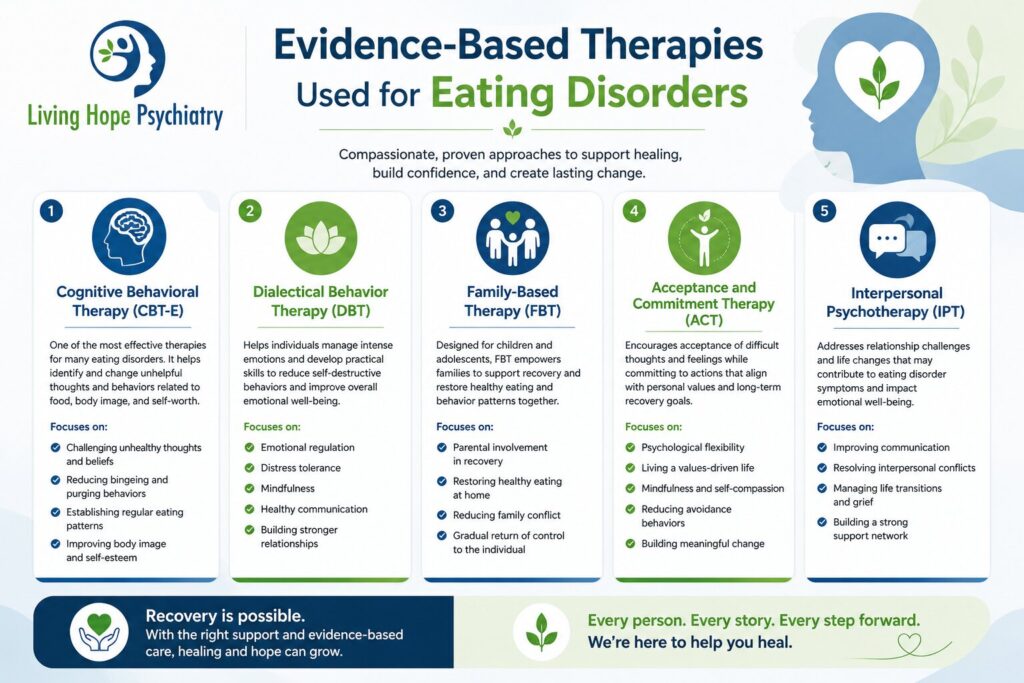
Several therapies have been extensively studied and shown to be effective for treating eating disorders. Your provider may recommend one approach or combine multiple therapies depending on your diagnosis, symptoms, age, and treatment goals.
Cognitive Behavioral Therapy (CBT-E)
Enhanced Cognitive Behavioral Therapy (CBT-E) is considered one of the most effective treatments for many eating disorders, especially bulimia nervosa, binge eating disorder, and some cases of anorexia nervosa.
CBT-E focuses on helping individuals:
- Identify unhealthy thought patterns about food, weight, and body image
- Develop healthier coping strategies
- Reduce binge eating and purging behaviors
- Establish regular eating routines
- Improve emotional regulation
- Challenge perfectionism and self-critical thinking
Example
Someone who believes, “I ate one unhealthy meal, so I’ve completely failed,” learns to recognize this as an all-or-nothing thought and replace it with a more balanced perspective.
Dialectical Behavior Therapy (DBT)
Some individuals use eating disorder behaviors to cope with overwhelming emotions. Dialectical Behavior Therapy (DBT) teaches practical skills for managing intense feelings without turning to food restriction, binge eating, or purging.
DBT helps improve:
- Emotional regulation
- Distress tolerance
- Mindfulness
- Healthy communication
- Interpersonal relationships
This therapy is often recommended for people who experience emotional eating, impulsive behaviors, or co-occurring mood disorders.
Family-Based Therapy (FBT)
For children, adolescents, and many teenagers, Family-Based Therapy can be highly effective.
Instead of placing blame on parents, FBT views families as an essential part of recovery.
Treatment may include:
- Helping parents support regular meals
- Reducing conflict around eating
- Monitoring recovery progress
- Gradually returning control over eating to the individual
Research consistently shows that family involvement can improve outcomes for younger patients.
Acceptance and Commitment Therapy (ACT)
Acceptance and Commitment Therapy encourages individuals to accept difficult thoughts and emotions instead of avoiding them through eating disorder behaviors.
ACT emphasizes:
- Psychological flexibility
- Personal values
- Self-compassion
- Mindful decision-making
- Long-term behavior change
Rather than eliminating uncomfortable feelings, individuals learn healthier ways to respond to them.
Interpersonal Psychotherapy (IPT)
Some eating disorders develop or worsen because of relationship challenges, grief, or major life transitions.
Interpersonal Psychotherapy helps individuals:
- Improve communication
- Resolve interpersonal conflicts
- Build stronger support systems
- Manage life changes
- Reduce social isolation
As relationships improve, eating disorder symptoms often become easier to manage.
Does Medication Help Treat Eating Disorders?
Medication is not a standalone treatment for eating disorders. However, it can play an important role when someone also experiences depression, anxiety, obsessive-compulsive symptoms, or other mental health conditions.
A psychiatrist may recommend medication when it supports the overall treatment plan.
Medication may help with:
- Anxiety symptoms
- Depression
- Obsessive thoughts
- Mood stabilization
- Reducing binge eating in selected cases
Medication decisions are always individualized based on medical history, current symptoms, and overall health.
Important: Never start, stop, or change psychiatric medication without consulting a qualified healthcare professional.
Nutrition Counseling: Rebuilding a Healthy Relationship with Food
Many people assume nutrition counseling simply means receiving a meal plan. In reality, nutrition therapy addresses the physical and emotional aspects of eating.
A registered dietitian specializing in eating disorders may help individuals:
- Restore adequate nutrition
- Reduce fear of certain foods
- Understand hunger and fullness cues
- Correct nutritional deficiencies
- Challenge food-related misconceptions
- Build confidence around meals
- Create realistic eating routines
Nutrition counseling is designed to support recovery rather than promote restrictive dieting.
Medical Monitoring During Recovery
Eating disorders can affect nearly every organ system, even when outward symptoms seem mild.
Medical monitoring helps identify and manage complications such as:
- Electrolyte imbalances
- Heart rhythm abnormalities
- Low blood pressure
- Malnutrition
- Bone density loss
- Hormonal changes
- Digestive issues
- Vitamin and mineral deficiencies
Regular follow-up appointments allow healthcare providers to track progress and adjust treatment as needed.
Levels of Eating Disorder Care
Not everyone requires the same level of treatment. Recommendations depend on medical stability, symptom severity, nutritional status, and daily functioning.
| Level of Care | Best For | Typical Services |
|---|---|---|
| Outpatient Care | Mild to moderate symptoms with medical stability | Therapy, psychiatry, nutrition counseling, regular follow-up |
| Intensive Outpatient Program (IOP) | Individuals needing more structured support while living at home | Multiple therapy sessions each week, meal support, nutrition education |
| Partial Hospitalization Program (PHP) | Moderate to severe symptoms requiring daily treatment without overnight admission | Medical monitoring, therapy, nutrition counseling, structured meals |
| Residential Treatment | Individuals needing 24-hour therapeutic support | Round-the-clock care, therapy, nutrition rehabilitation, medical supervision |
| Inpatient Hospitalization | Severe medical or psychiatric instability | Medical stabilization, continuous monitoring, emergency care |
The goal is always to provide the least restrictive level of care that can safely support recovery.
How Long Does Eating Disorder Treatment Take?
Recovery is highly individual.
Some people notice meaningful improvement within a few months, while others benefit from longer-term support.
Recovery depends on factors such as:
- Early diagnosis
- Type of eating disorder
- Severity of symptoms
- Medical complications
- Co-occurring mental health conditions
- Family support
- Consistency with treatment
Healing is rarely a straight line. Temporary setbacks do not mean treatment has failed—they are often a normal part of the recovery process.
What Recovery Can Look Like
Recovery is about much more than weight restoration or changing eating habits.
People in recovery often experience improvements in:
- Energy levels
- Concentration
- Sleep quality
- Mood
- Self-esteem
- Relationships
- School or work performance
- Physical health
- Emotional resilience
- Overall quality of life
Many individuals also regain the ability to enjoy meals, social events, and activities that once caused significant anxiety.
Supporting a Loved One with an Eating Disorder
Family members and friends often want to help but may not know the best approach.
Helpful Ways to Offer Support
- Listen without judgment.
- Encourage professional treatment.
- Avoid commenting on weight or appearance.
- Focus on health rather than body size.
- Be patient during setbacks.
- Celebrate progress beyond the scale.
- Attend family therapy if recommended.
- Learn about eating disorders from reliable sources.
What to Avoid
- Forcing someone to eat without professional guidance
- Using guilt or shame
- Comparing recovery journeys
- Making jokes about food or weight
- Offering unsolicited diet advice
- Assuming recovery happens quickly
A supportive environment can make a meaningful difference throughout treatment.
Choosing the Right Treatment Provider in McKinney, TX
Finding the right provider involves more than selecting the closest clinic.
Consider asking:
- Does the provider have experience treating eating disorders?
- Is treatment individualized?
- Are psychiatric evaluations available if needed?
- Is nutrition counseling included or coordinated?
- Does the practice collaborate with therapists and dietitians?
- Are family members involved when appropriate?
- How are medical concerns monitored?
- Is ongoing follow-up available after symptoms improve?
Comprehensive, coordinated care often leads to better long-term outcomes.
Eating Disorder Treatment Checklist
Use this checklist when evaluating treatment options:
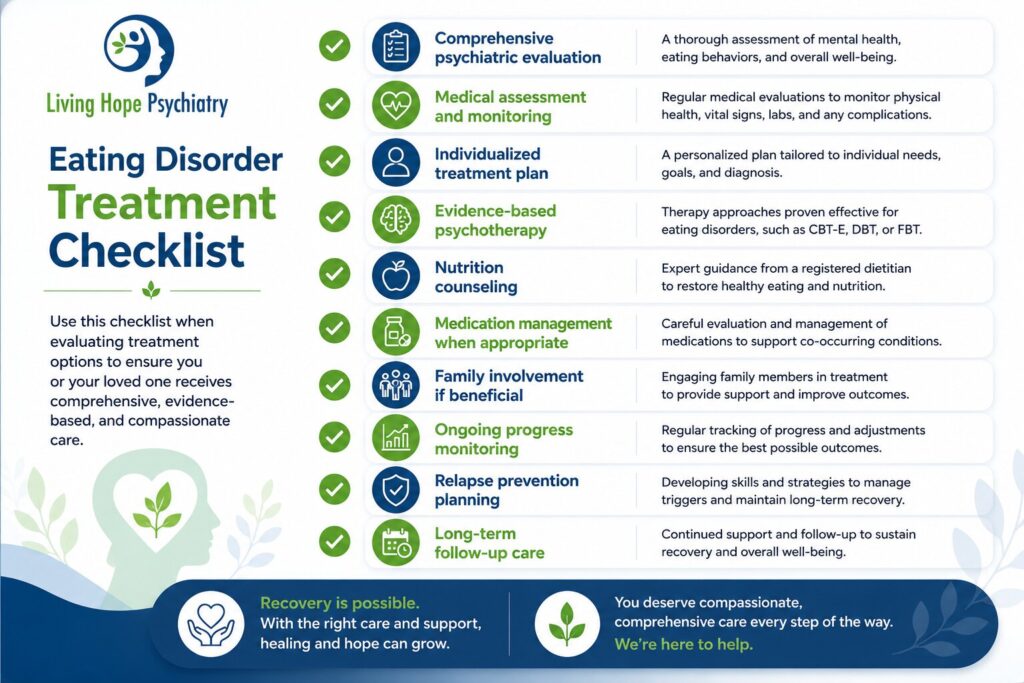
- ✅ Comprehensive psychiatric evaluation
- ✅ Medical assessment and monitoring
- ✅ Individualized treatment plan
- ✅ Evidence-based psychotherapy
- ✅ Nutrition counseling
- ✅ Medication management when appropriate
- ✅ Family involvement if beneficial
- ✅ Ongoing progress monitoring
- ✅ Relapse prevention planning
- ✅ Long-term follow-up care
Common Myths vs. Facts
| Myth | Fact |
|---|---|
| Eating disorders only affect teenagers. | They can affect children, adults, and older adults of all genders. |
| Someone must be underweight to have an eating disorder. | Eating disorders occur in people of all body sizes. |
| Recovery is simply about eating more. | Recovery addresses physical, emotional, and psychological health. |
| Willpower alone can overcome an eating disorder. | Professional treatment is often essential for lasting recovery. |
| Recovery happens quickly. | Recovery is a gradual process that varies from person to person. |
What to Expect from Eating Disorder Treatment at Living Hope Psychiatry in McKinney, TX
At Living Hope Psychiatry, treatment focuses on the whole person—not just eating behaviors. Every individual has unique experiences, medical needs, and recovery goals, so care should always be personalized rather than following a one-size-fits-all approach.
Depending on your needs, treatment may include:
- Comprehensive psychiatric evaluations
- Individualized treatment planning
- Medication management when appropriate
- Coordination with therapists and registered dietitians
- Ongoing mental health support
- Monitoring for co-occurring conditions such as anxiety or depression
- Regular follow-up visits to track progress and adjust care
The goal is to provide compassionate, evidence-based care that supports both mental and physical well-being throughout the recovery process.
Key Takeaways
- Eating disorders are serious but treatable mental health conditions.
- Early diagnosis and treatment often lead to better outcomes.
- Recovery involves medical care, therapy, nutrition counseling, and ongoing support.
- Treatment plans should be individualized based on each person’s unique needs.
- Long-term recovery focuses on improving both physical health and emotional well-being.
- Professional support can help individuals build healthier relationships with food, body image, and themselves.
FAQs
1. What is the most effective treatment for eating disorders?
The most effective treatment depends on the individual’s diagnosis and needs. Many people benefit from a combination of psychotherapy, nutritional counseling, medical monitoring, and psychiatric care. Cognitive Behavioral Therapy (CBT-E) is one of the most well-researched treatments for several eating disorders.
2. Can eating disorders be treated on an outpatient basis?
Yes. Many individuals receive successful treatment through outpatient care when they are medically stable. Those with more severe symptoms or medical complications may require intensive outpatient, partial hospitalization, residential, or inpatient treatment.
3. How long does eating disorder recovery take?
Recovery timelines vary widely. Some people notice improvement within a few months, while others benefit from ongoing treatment over a longer period. Consistent care and follow-up are important for lasting recovery.
4. Can adults develop eating disorders?
Absolutely. Although eating disorders often begin during adolescence, they can develop at any age and affect people of all genders and body sizes.
5. Are medications used to treat eating disorders?
Medication may be recommended to help manage co-occurring conditions such as anxiety, depression, or obsessive-compulsive symptoms. Medication is generally most effective when combined with psychotherapy and nutritional support.
Final Thoughts
An eating disorder can affect every aspect of a person’s life, but recovery is possible with the right support. Seeking professional care is not a sign of weakness—it is an important step toward improving your health, rebuilding your relationship with food, and enhancing your overall quality of life.
Whether symptoms are new or have been present for years, personalized treatment can help address both the physical and emotional aspects of recovery. Taking action early and working with experienced mental health professionals can make a meaningful difference in long-term outcomes.
If you or someone you care about is looking for Eating Disorder Treatment in McKinney, TX, Living Hope Psychiatry provides compassionate, evidence-based psychiatric care tailored to each individual’s needs. A comprehensive evaluation can help determine the most appropriate treatment plan and connect you with the resources needed to support lasting recovery.