
Sleep is essential for physical health, emotional well-being, memory, and daily performance. Yet millions of people struggle with sleep disorders that affect how long, how well, or when they sleep. While an occasional restless night is normal, ongoing sleep problems may indicate an underlying sleep disorder that requires attention.
If you’ve been wondering, “types of sleep disorders?”, this guide provides an evidence-based explanation of the five major categories, their symptoms, causes, treatment options, and when to seek medical care.
Quick Answer: What Are the 5 Types of Sleep Disorders?
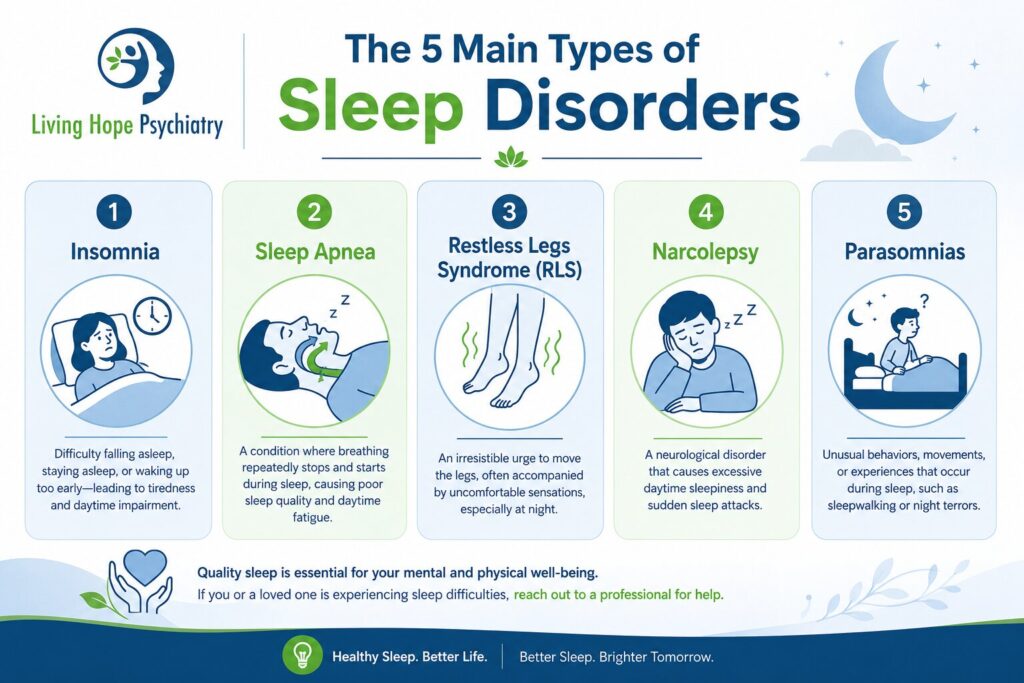
The five major types of sleep disorders are:
| Sleep Disorder Type | What It Is | Common Symptoms |
|---|---|---|
| Insomnia | Difficulty falling asleep or staying asleep | Trouble sleeping, daytime fatigue |
| Sleep Apnea | Repeated pauses in breathing during sleep | Loud snoring, gasping, morning headaches |
| Restless Legs Syndrome (RLS) | Uncomfortable urge to move the legs | Leg discomfort, worse at night |
| Narcolepsy | Neurological disorder affecting sleep-wake regulation | Excessive daytime sleepiness, sudden sleep attacks |
| Parasomnias | Abnormal behaviors during sleep | Sleepwalking, night terrors, talking during sleep |
These disorders vary in severity, but each can interfere with health, concentration, mood, and quality of life.
Why Understanding Sleep Disorders Matters
Sleep is when the brain restores memory, regulates hormones, strengthens immunity, and repairs the body. Poor sleep doesn’t simply cause tiredness, it may increase the risk of:
- Depression
- Anxiety disorders
- Heart disease
- High blood pressure
- Diabetes
- Obesity
- Reduced concentration
- Memory difficulties
- Workplace and driving accidents
Recognizing symptoms early allows people to receive appropriate treatment before complications develop.
What Is a Sleep Disorder?
A sleep disorder is a medical condition that regularly disrupts normal sleep. It may affect:
- Falling asleep
- Staying asleep
- Breathing during sleep
- Body movements
- Sleep timing
- Sleep quality
Some disorders develop gradually and may go unnoticed for years.
The 5 Main Types of Sleep Disorders
1. Insomnia
What Is Insomnia?
Insomnia is the most common sleep disorder. It occurs when someone consistently struggles to fall asleep, remain asleep, or wake too early despite having enough opportunity to sleep.
Symptoms
- Difficulty falling asleep
- Frequent nighttime awakenings
- Waking too early
- Feeling unrefreshed
- Daytime sleepiness
- Irritability
- Poor concentration
Common Causes
- Stress
- Anxiety
- Depression
- Chronic pain
- Shift work
- Certain medications
- Excess caffeine or alcohol
- Poor sleep habits
Treatment Options
- Cognitive Behavioral Therapy for Insomnia (CBT-I)
- Better sleep hygiene
- Relaxation techniques
- Regular sleep schedule
- Medication (when appropriate)
Clinical Insight: CBT-I is considered the first-line treatment for chronic insomnia because it addresses behaviors and thought patterns that interfere with sleep.
2. Sleep Apnea
What Is Sleep Apnea?
Sleep apnea causes repeated pauses in breathing during sleep. These interruptions reduce oxygen levels and repeatedly wake the brain, often without the person realizing it.
Two Main Types
- Obstructive Sleep Apnea (OSA)
- Central Sleep Apnea (CSA)
Obstructive sleep apnea is far more common.
Symptoms
- Loud snoring
- Gasping during sleep
- Morning headaches
- Dry mouth
- Excessive daytime sleepiness
- Poor memory
- Difficulty concentrating
Risk Factors
- Excess weight
- Large neck circumference
- Family history
- Smoking
- Alcohol use
- Aging
Treatment
- Continuous Positive Airway Pressure (CPAP)
- Weight management
- Sleeping on the side
- Oral appliances
- Surgery (selected cases)
Important: Untreated sleep apnea increases the risk of heart disease, stroke, high blood pressure, and type 2 diabetes.
3. Restless Legs Syndrome (RLS)
What Is Restless Legs Syndrome?
Restless Legs Syndrome is a neurological condition causing an irresistible urge to move the legs, particularly during periods of rest or at bedtime.
Symptoms
- Tingling
- Crawling sensations
- Burning feelings
- Leg discomfort
- Symptoms worsen at night
- Temporary relief after movement
Causes
- Iron deficiency
- Pregnancy
- Kidney disease
- Peripheral neuropathy
- Genetics
Treatment
- Iron replacement when deficient
- Lifestyle changes
- Regular exercise
- Prescription medications
- Limiting caffeine and alcohol
4. Narcolepsy
What Is Narcolepsy?
Narcolepsy is a chronic neurological disorder affecting the brain’s ability to regulate sleep and wakefulness.
People with narcolepsy may suddenly fall asleep during normal daily activities.
Symptoms
- Excessive daytime sleepiness
- Sleep attacks
- Sleep paralysis
- Hallucinations while falling asleep or waking
- Cataplexy (sudden muscle weakness triggered by emotions)
Causes
Narcolepsy is associated with loss of hypocretin-producing brain cells, although genetics and immune system changes may also contribute.
Treatment
- Wake-promoting medications
- Scheduled naps
- Lifestyle adjustments
- Good sleep hygiene
5. Parasomnias
What Are Parasomnias?
Parasomnias involve unusual behaviors, movements, emotions, or experiences during sleep.
Examples
- Sleepwalking
- Sleep talking
- Night terrors
- REM Sleep Behavior Disorder
- Confusional arousals
Symptoms
- Walking while asleep
- Screaming
- Acting out dreams
- Confusion upon waking
- Little memory of events
Treatment
Treatment depends on the specific parasomnia and may include:
- Improving sleep habits
- Managing stress
- Safety precautions
- Treating underlying medical conditions
- Medication when necessary
Comparison of the Five Types of Sleep Disorders
| Disorder | Main Problem | Typical Symptoms | Common Treatment |
|---|---|---|---|
| Insomnia | Difficulty sleeping | Trouble falling or staying asleep | CBT-I, sleep hygiene |
| Sleep Apnea | Interrupted breathing | Snoring, gasping, fatigue | CPAP, weight loss |
| Restless Legs Syndrome | Leg discomfort | Urge to move legs | Iron therapy, medication |
| Narcolepsy | Sleep regulation | Daytime sleep attacks | Wake-promoting medications |
| Parasomnias | Abnormal sleep behaviors | Sleepwalking, night terrors | Safety measures, medical evaluation |
Common Symptoms That May Suggest a Sleep Disorder
You should consider discussing your symptoms with a healthcare professional if you experience:
- Trouble sleeping most nights
- Loud snoring
- Gasping during sleep
- Constant daytime fatigue
- Falling asleep unexpectedly
- Frequent nightmares
- Sleepwalking
- Morning headaches
- Difficulty concentrating
- Mood changes
- Memory problems
What Causes Sleep Disorders?
Sleep disorders often result from multiple factors working together.
Common causes include:
- Stress
- Anxiety
- Depression
- Obesity
- Neurological disorders
- Hormonal changes
- Aging
- Chronic illnesses
- Certain medications
- Alcohol
- Caffeine
- Poor sleep hygiene
- Genetics
Sometimes identifying and treating the underlying cause significantly improves sleep.
How Are Sleep Disorders Diagnosed?
Healthcare providers may use:
- Medical history
- Sleep diary
- Physical examination
- Sleep questionnaires
- Polysomnography (overnight sleep study)
- Home sleep apnea testing
- Multiple Sleep Latency Test (MSLT)
An accurate diagnosis helps determine the most effective treatment.
Treatment Options for Sleep Disorders
Treatment depends on the specific diagnosis but may include:
Lifestyle Changes
- Maintain a consistent sleep schedule
- Limit caffeine in the afternoon and evening
- Exercise regularly
- Avoid large meals before bedtime
- Keep the bedroom cool, quiet, and dark
Behavioral Therapy
Behavioral approaches, especially CBT-I, are highly effective for chronic insomnia.
Medical Treatments
- CPAP therapy
- Prescription medications
- Iron supplementation
- Wake-promoting medications
- Treatment of underlying medical conditions
Healthy Sleep Habits Checklist
✔ Go to bed at the same time every night
✔ Wake up at the same time daily
✔ Avoid screens before bedtime
✔ Exercise regularly
✔ Limit alcohol and nicotine
✔ Reduce caffeine intake later in the day
✔ Keep the bedroom dark and quiet
✔ Create a relaxing bedtime routine
Sleep Disorders and Mental Health
Sleep and mental health influence each other. Conditions such as depression, anxiety, bipolar disorder, and post-traumatic stress disorder can disrupt sleep, while persistent sleep disorders may worsen emotional well-being.
Addressing both sleep concerns and mental health together often leads to better overall outcomes.
When Should You See a Healthcare Provider?
Seek medical evaluation if:
- Sleep problems continue for more than a few weeks.
- Daytime sleepiness affects work, school, or driving.
- You snore loudly and experience choking or gasping during sleep.
- You frequently fall asleep unexpectedly.
- You or a loved one notice unusual behaviors during sleep.
- Sleep issues are affecting your mood, memory, or quality of life.
Early assessment can help identify underlying conditions and guide appropriate treatment.
Key Takeaways
- The five main types of sleep disorders are insomnia, sleep apnea, restless legs syndrome, narcolepsy, and parasomnias.
- Each disorder affects sleep differently and may require a different treatment approach.
- Chronic sleep problems should not be ignored, as they can affect physical health, mental health, and daily functioning.
- Healthy sleep habits can improve sleep quality, but persistent symptoms should be evaluated by a healthcare professional.
- Early diagnosis and personalized treatment often lead to better long-term outcomes.
FAQs
What are the five most common sleep disorders?
The five commonly recognized categories are insomnia, sleep apnea, restless legs syndrome, narcolepsy, and parasomnias. Together, they account for many chronic sleep-related complaints seen in clinical practice.
Which sleep disorder is the most common?
Insomnia is the most common sleep disorder. Many adults experience it occasionally, while chronic insomnia affects a smaller but significant portion of the population.
Can sleep disorders be cured?
Some sleep disorders can be effectively treated or resolved, particularly when an underlying cause is identified. Others, such as narcolepsy, are chronic conditions that can often be managed successfully with ongoing treatment and lifestyle adjustments.
Is snoring always a sign of sleep apnea?
No. Many people snore without having sleep apnea. However, loud snoring combined with pauses in breathing, gasping, or excessive daytime sleepiness should be evaluated by a healthcare provider.
Can anxiety cause sleep disorders?
Yes. Anxiety can contribute to insomnia and other sleep difficulties, while poor sleep may also increase anxiety symptoms. Treating both conditions together often provides the best results.
How many hours of sleep do adults need?
Most adults benefit from 7 to 9 hours of sleep per night, although individual needs can vary.
Conclusion
Understanding types of sleep disorders are is the first step toward recognizing when sleep problems may require medical attention. Insomnia, sleep apnea, restless legs syndrome, narcolepsy, and parasomnias each affect sleep in different ways, but all have the potential to impact physical health, mental well-being, and daily life.
Take the First Step Toward Better Sleep
If sleep problems are affecting your daily life, Living Hope Psychiatry is here to help. We provide compassionate, personalized mental health care for individuals in McKinney, TX, helping address sleep concerns related to anxiety, depression, and other mental health conditions. Schedule an appointment today and take the first step toward better sleep and improved well-being.