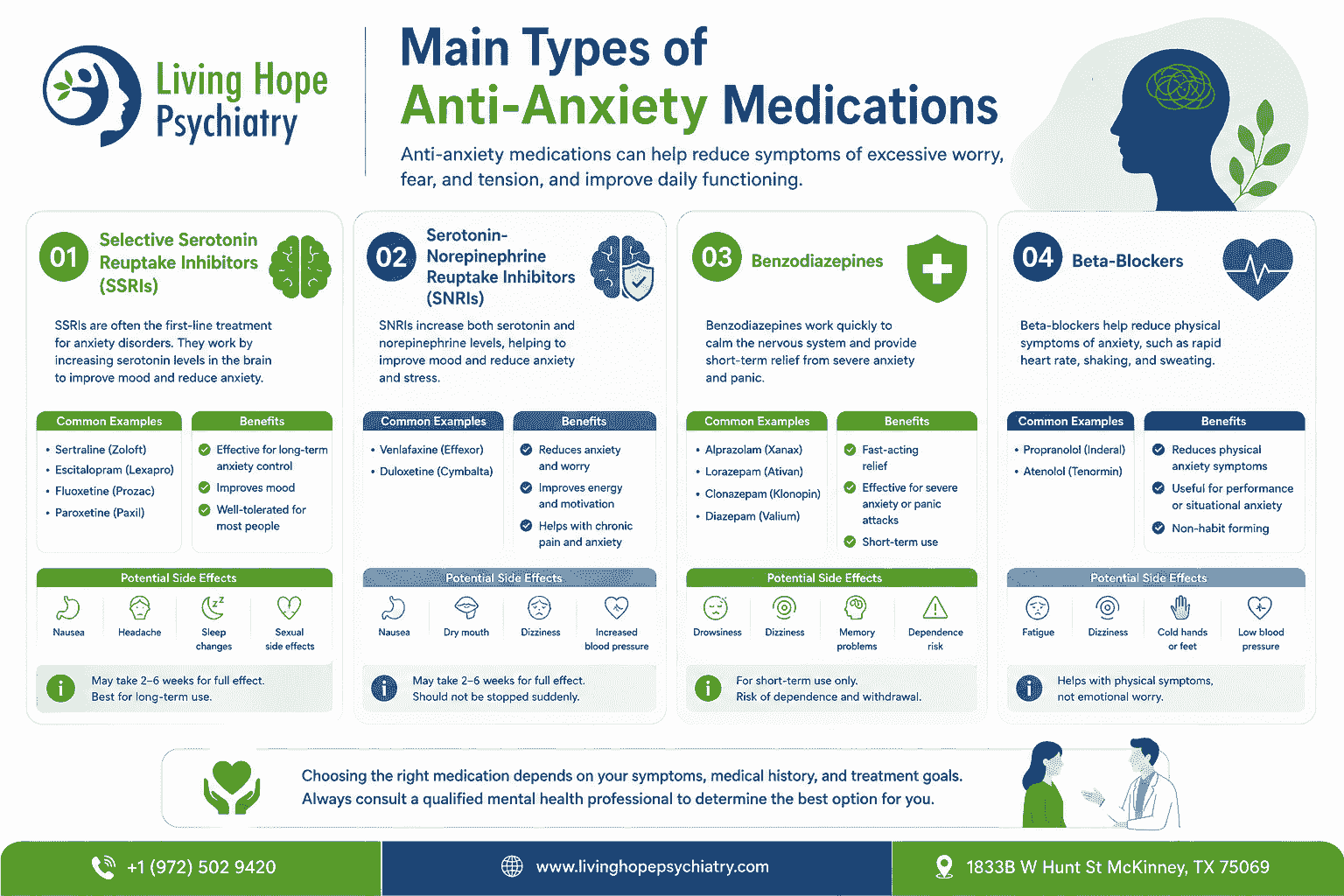
The main types of anti-anxiety medications are Selective Serotonin Reuptake Inhibitors (SSRIs), Serotonin-Norepinephrine Reuptake Inhibitors (SNRIs), benzodiazepines, and beta-blockers. Each type works differently and may be prescribed based on the severity of symptoms, the type of anxiety disorder, and a person’s overall health.
1. Selective Serotonin Reuptake Inhibitors (SSRIs)
SSRIs are among the most commonly prescribed medications for anxiety disorders. They work by increasing serotonin levels in the brain, which can help improve mood and reduce anxiety symptoms. These medications are often used to treat generalized anxiety disorder (GAD), panic disorder, social anxiety disorder, and obsessive-compulsive disorder (OCD).
Because SSRIs typically take several weeks to become fully effective, they are generally considered a long-term treatment option rather than a quick solution for anxiety relief.
2. Serotonin-Norepinephrine Reuptake Inhibitors (SNRIs)
SNRIs increase both serotonin and norepinephrine levels in the brain. Like SSRIs, they are commonly prescribed for long-term anxiety management and may also help individuals experiencing depression alongside anxiety.
Many healthcare providers recommend SNRIs when anxiety symptoms significantly affect daily functioning, work performance, or overall quality of life.
3. Benzodiazepines
Benzodiazepines are fast-acting medications that can provide rapid relief from intense anxiety, panic attacks, or acute episodes of stress. They work by calming activity in the central nervous system, helping individuals feel more relaxed within a short period.
While effective for short-term symptom relief, benzodiazepines are generally prescribed cautiously because long-term use may lead to dependence or tolerance. For this reason, they are often used as a temporary treatment while longer-term medications begin to take effect.
Read More: Does Anxiety Medication Cause Weight Gain?
4. Beta-Blockers
Beta-blockers are primarily used to treat heart-related conditions, but they can also help manage the physical symptoms of anxiety. These symptoms may include a racing heartbeat, shaking, sweating, or trembling during stressful situations.
They are commonly prescribed for performance anxiety, public speaking anxiety, or other situations where physical symptoms are the primary concern.
Which Anti-Anxiety Medication Is Right for You?
There is no single medication that works best for everyone. The most appropriate treatment depends on factors such as the type of anxiety disorder, symptom severity, medical history, potential side effects, and individual treatment goals.
A licensed healthcare provider can evaluate your symptoms and recommend a personalized treatment plan that may include medication, therapy, lifestyle changes, or a combination of approaches.
Key Takeaway
The four primary categories of anti-anxiety medications are SSRIs, SNRIs, benzodiazepines, and beta-blockers. SSRIs and SNRIs are commonly used for long-term anxiety management, benzodiazepines provide short-term relief of severe symptoms, and beta-blockers help control physical anxiety symptoms. Understanding these treatment options can help individuals make informed decisions about their mental health care with guidance from a qualified professional.
Ready to Take Control of Anxiety?
Living with anxiety can feel overwhelming, but effective treatment is available. At Living Hope Psychiatry, we provide compassionate and personalized anxiety treatment for adolescents and adults in McKinney, TX.
From professional evaluations to customized medication management and ongoing mental health support, our goal is to help you regain confidence, reduce anxiety symptoms, and improve your overall well-being. Schedule your appointment with Living Hope Psychiatry today and take the first step toward lasting relief and better mental health.