
Grief can feel overwhelming, exhausting, and emotionally disorienting. For some people, the sadness gradually softens with time and support. For others, grief becomes deeply persistent and starts affecting sleep, appetite, work, relationships, and mental health. When that happens, many people begin searching for the best medication for grief depression and whether treatment can genuinely help.
The short answer: medication may help in certain cases, especially when grief triggers major depression, severe anxiety, insomnia, or complicated grief. But there is no single “grief pill.” The best approach depends on symptoms, medical history, emotional functioning, and professional evaluation.
Understanding Grief vs. Grief Depression
What Is Normal Grief?
Grief is a natural response to loss. It may involve:
- Intense sadness
- Crying spells
- Emotional numbness
- Difficulty concentrating
- Sleep changes
- Loss of appetite
- Waves of longing or guilt
These symptoms often fluctuate. Even during grief, people can usually still experience moments of connection, humor, or hope.
What Is Grief Depression?
Grief depression happens when symptoms go beyond typical mourning and begin resembling major depressive disorder (MDD).
Common signs include:
- Persistent hopelessness
- Constant emptiness
- Loss of interest in daily life
- Severe fatigue
- Suicidal thoughts
- Inability to function normally
- Extreme isolation
- Intense guilt unrelated to the loss
Quick Difference Table
| Normal Grief | Depression Related to Grief |
|---|---|
| Emotions come in waves | Persistent low mood |
| Still able to feel pleasure occasionally | Little or no pleasure |
| Self-esteem usually intact | Feelings of worthlessness |
| Gradual improvement over time | Symptoms worsen or stay constant |
| Thoughts focused on the deceased | Negative thoughts about self and future |
Is There a Best Medication for Grief Depression?
There is no universally “best” medication. The right treatment depends on:
- Symptom severity
- Anxiety levels
- Sleep disturbances
- Personal medical history
- Previous antidepressant response
- Risk factors
- Co-occurring conditions
That said, doctors commonly prescribe antidepressants when grief evolves into clinical depression.
Most Common Medications Used for Grief Depression
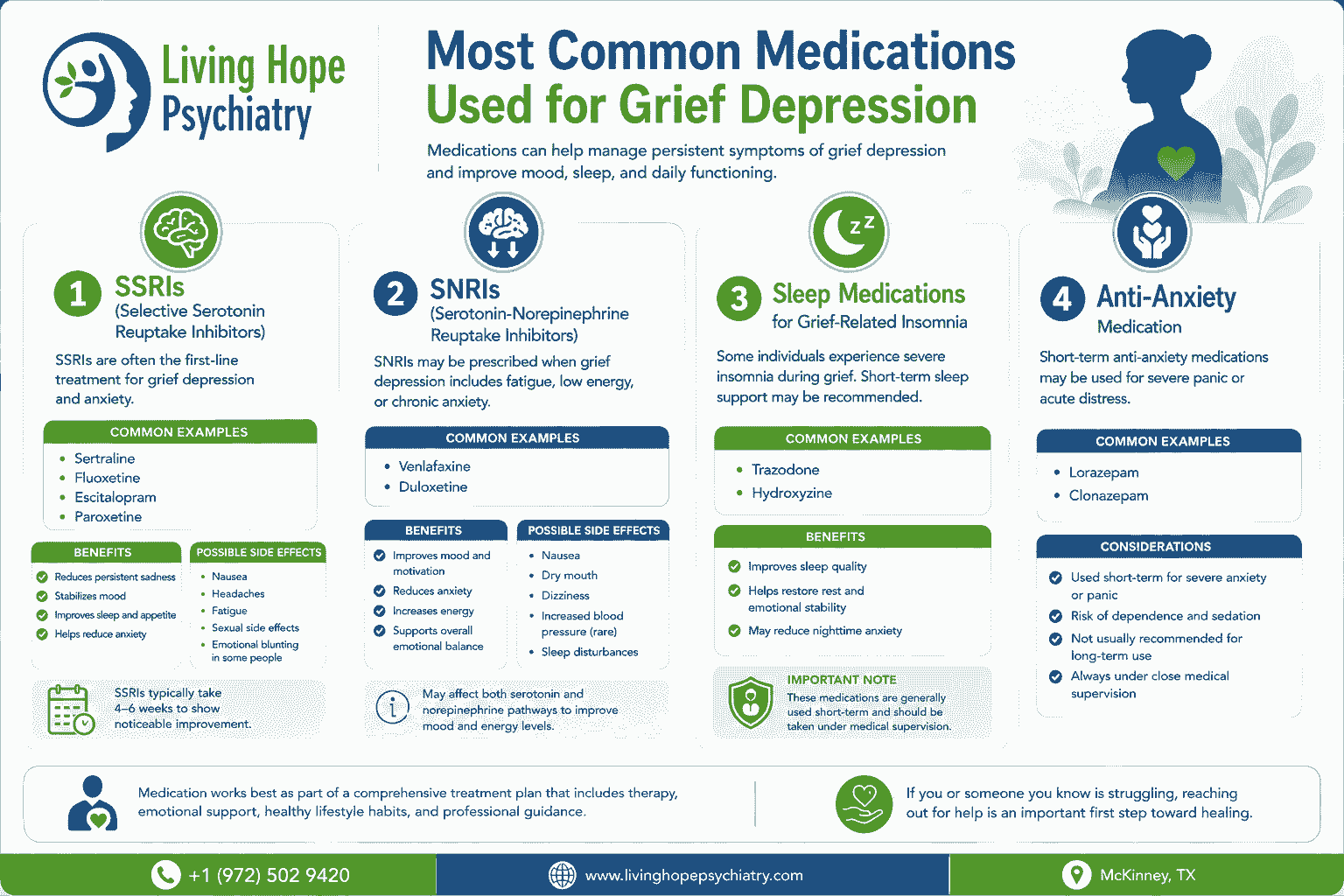
SSRIs (Selective Serotonin Reuptake Inhibitors)
SSRIs are often the first-line treatment.
Common examples include:
- Sertraline
- Fluoxetine
- Escitalopram
- Paroxetine
Benefits
- Can reduce persistent sadness
- Help stabilize mood
- Improve anxiety symptoms
- May improve sleep and appetite
Possible Side Effects
- Nausea
- Headaches
- Fatigue
- Sexual side effects
- Emotional blunting in some people
SSRIs typically take 4–6 weeks to show noticeable improvement.
SNRIs (Serotonin-Norepinephrine Reuptake Inhibitors)
Doctors sometimes prescribe SNRIs when grief depression includes fatigue or chronic anxiety.
Examples include:
- Venlafaxine
- Duloxetine
These medications affect both serotonin and norepinephrine pathways.
Sleep Medications for Grief-Related Insomnia
Some grieving individuals experience severe insomnia. In certain cases, doctors may recommend short-term sleep support.
Examples may include:
- Trazodone
- Hydroxyzine
Sleep improvement alone can significantly reduce emotional distress during grief recovery.
Anti-Anxiety Medication
Short-term anti-anxiety medications may occasionally be prescribed for acute panic or severe distress.
Examples include benzodiazepines such as:
- Lorazepam
- Clonazepam
However, these medications are generally used cautiously because of:
- Dependence risk
- Sedation
- Emotional suppression
- Withdrawal concerns
Many mental health professionals avoid long-term benzodiazepine use during grief treatment.
What Doctors Often Miss About Grief Depression
One of the biggest misconceptions is assuming grief automatically requires medication. In reality:
- Normal grief is not a disorder
- Emotional pain after loss is expected
- Medication cannot “erase” grief
- Suppressing emotions too aggressively may delay processing
The best treatment plans usually combine:
- Therapy
- Emotional support
- Lifestyle stabilization
- Sleep restoration
- Medication only when clinically appropriate
This balanced approach is often more effective than medication alone.
When Medication May Be Appropriate
Medication may help if grief causes:
Severe Functional Impairment
You cannot work, care for yourself, or maintain basic routines.
Suicidal Thoughts
Persistent thoughts of self-harm require immediate professional attention.
Major Depression Symptoms
Symptoms last for weeks without improvement.
Panic or Extreme Anxiety
The nervous system remains in constant distress.
Complicated Grief Disorder
Also called prolonged grief disorder, this involves intense grief lasting far beyond expected adjustment periods.
Best Non-Medication Treatments for Grief Depression
Research consistently shows that therapy plays a major role in recovery.
Cognitive Behavioral Therapy (CBT)
CBT helps identify:
- Negative thought patterns
- Catastrophic thinking
- Guilt loops
- Avoidance behaviors
Grief Counseling
Grief counseling focuses specifically on:
- Emotional processing
- Meaning reconstruction
- Relationship loss
- Identity changes after bereavement
Support Groups
Group support reduces isolation and provides emotional validation.
Lifestyle Interventions
These are often underestimated but clinically important:
Helpful Daily Habits
- Consistent sleep schedule
- Daily movement or walking
- Regular meals
- Sunlight exposure
- Social connection
- Limiting alcohol use
Even small improvements can stabilize emotional regulation during grief recovery.
Depression Treatment in Texas: What Patients Should Know
People searching for Depression Treatment in Texas often want both medication management and therapy options.
Many treatment centers in Texas now offer:
- Psychiatric evaluations
- Telehealth appointments
- CBT programs
- Trauma-informed counseling
- Medication management
- Intensive outpatient programs (IOPs)
When to Seek Professional Treatment
Consider professional help if grief symptoms:
- Persist beyond several months
- Intensify over time
- Cause suicidal thinking
- Lead to substance misuse
- Disrupt work or relationships
Integrated care tends to produce better outcomes than relying on medication alone.
Can Antidepressants Make Grief Worse?
In some cases, yes.
Some people report:
- Emotional numbness
- Reduced emotional connection
- Feeling “flat”
- Difficulty crying
This does not happen to everyone, but it is important to discuss openly with a healthcare provider.
The goal is not emotional shutdown. The goal is restoring stability while allowing healthy emotional processing.
How Long Should Someone Stay on Medication?
Treatment duration varies.
Many providers recommend:
- Several months after symptoms improve
- Longer treatment for recurrent depression
- Gradual tapering rather than abrupt stopping
Stopping antidepressants suddenly can trigger withdrawal symptoms or relapse.
Always follow medical guidance before changing medications.
Key Takeaways
Best Medication for Grief Depression at a Glance
| Medication Type | Main Purpose | Common Examples |
|---|---|---|
| SSRIs | Depression and anxiety | Sertraline, Escitalopram |
| SNRIs | Depression with fatigue/anxiety | Venlafaxine, Duloxetine |
| Sleep Aids | Insomnia support | Trazodone |
| Anti-Anxiety Medications | Short-term severe anxiety relief | Lorazepam |
Most Important Insight
Medication works best as part of a broader treatment plan that includes therapy, emotional support, sleep recovery, and healthy coping strategies.
FAQs
What is the best medication for grief depression?
There is no single best medication for everyone. SSRIs such as Sertraline and Escitalopram are commonly prescribed when grief leads to major depressive symptoms.
Can grief alone cause depression?
Yes. Intense or prolonged grief can trigger clinical depression, especially after traumatic or unexpected loss.
Should everyone with grief take antidepressants?
No. Normal grief usually does not require medication. Antidepressants are typically considered when symptoms become severe, persistent, or disabling.
How long does grief depression last?
It varies widely. Some people improve within months, while others experience prolonged grief disorder or major depression requiring professional treatment.
Is therapy better than medication for grief?
For many people, therapy is the foundation of treatment. Medication may help when symptoms are severe, but counseling addresses emotional processing more directly.
What type of doctor treats grief depression?
Primary care physicians, psychiatrists, psychologists, therapists, and licensed grief counselors can all play a role in treatment.
Final Thoughts
Searching for the best medication for grief depression usually comes from a very human place: wanting relief from emotional pain that feels impossible to carry alone.
Medication can help some people regain stability, improve sleep, reduce overwhelming depression, and function again. But the most effective recovery plans also include therapy, emotional support, healthy routines, and time. If grief-related depression is affecting your daily life, you do not have to go through it alone. Professional support can help you regain emotional balance, improve your mental well-being, and develop healthy coping strategies for healing.
At Living Hope Psychiatry, compassionate mental health professionals provide personalized Depression Treatment in McKinney tailored to your unique needs. From psychiatric evaluations and medication management to ongoing emotional support, their team is committed to helping you move toward recovery with confidence and care.
Take the first step toward healing today by scheduling a confidential consultation with Living Hope Psychiatry.