Generalized Anxiety Disorder (GAD) can feel like a constant hum of worry about work, health, finances, or everyday decisions. If you’re searching for a proven, structured way to manage persistent anxiety, Cognitive Behavioral Therapy (CBT) is widely considered the gold standard. This guide explains how CBT works for GAD, what to expect in therapy, and how you can start applying its techniques in daily life.
What Is Generalized Anxiety Disorder?
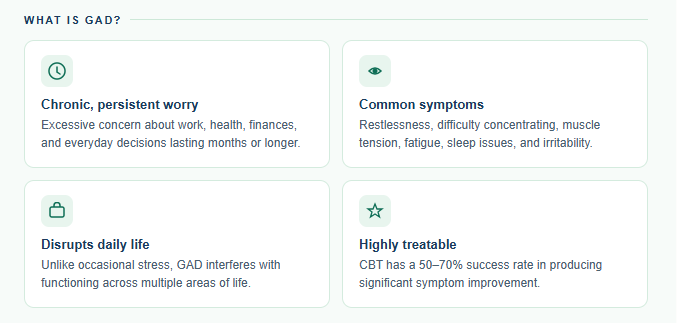
GAD is a chronic mental health condition characterized by excessive, uncontrollable worry about multiple areas of life. Unlike occasional stress, GAD persists for months and can interfere with daily functioning.
Common Symptoms of GAD
- Constant worry or overthinking
- Restlessness or feeling “on edge”
- Difficulty concentrating
- Muscle tension and fatigue
- Sleep disturbances
- Irritability
What Is Cognitive Behavioral Therapy (CBT)?
CBT is a structured, evidence-based psychotherapy that focuses on identifying and changing negative thought patterns and behaviors.
Core Principle
Your thoughts, feelings, and behaviors are interconnected. By changing how you think, you can influence how you feel and act.
Why CBT Is Effective for GAD
CBT is one of the most researched treatments for anxiety disorders. It works because it targets the root causes of anxiety, not just the symptoms.
Key Benefits
- Helps you recognize irrational thinking
- Teaches practical coping skills
- Provides long-term anxiety management
- Reduces reliance on medication (in some cases)
How CBT Works for Generalized Anxiety Disorder
CBT for GAD typically involves a series of structured sessions with a trained therapist. Each session builds on specific skills.
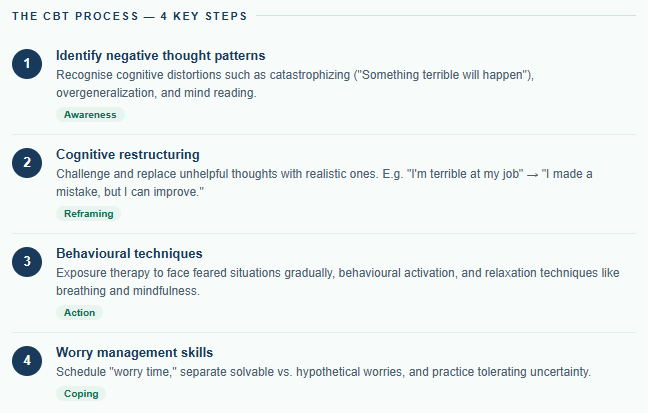
1. Identifying Negative Thought Patterns
You’ll learn to spot cognitive distortions, such as:
- Catastrophizing (“Something terrible will happen”)
- Overgeneralization (“I always fail”)
- Mind reading (“They think I’m incompetent”)
2. Cognitive Restructuring
This step involves challenging and replacing unhelpful thoughts with realistic ones.
Example:
| Situation | Negative Thought | Balanced Thought |
|---|---|---|
| Missed a deadline | “I’m terrible at my job” | “I made a mistake, but I can improve next time” |
3. Behavioral Techniques
CBT includes practical exercises to change behavior patterns:
- Exposure Therapy: Gradually facing feared situations
- Behavioral Activation: Engaging in meaningful activities
- Relaxation Techniques: Breathing, mindfulness
4. Worry Management Skills
You’ll learn to:
- Schedule “worry time”
- Separate solvable vs. hypothetical worries
- Practice letting go of uncertainty
CBT Techniques You Can Start Today
Even without a therapist, you can begin applying CBT principles.
Daily CBT Exercises
- Thought Journal: Write down anxious thoughts and challenge them
- Reality Testing: Ask, “What evidence supports this fear?”
- Breathing Exercises: Slow, controlled breathing to calm the body
- Problem-Solving Steps:
- Define the problem
- Brainstorm solutions
- Take action
What to Expect in CBT Sessions
| Aspect | Details |
|---|---|
| Duration | 8–20 sessions (varies by individual) |
| Format | Weekly sessions (in-person or online) |
| Approach | Structured, goal-oriented |
| Homework | Practice exercises between sessions |
CBT vs. Medication for GAD
| Factor | CBT | Medication |
|---|---|---|
| Focus | Long-term coping skills | Symptom relief |
| Side Effects | None | Possible |
| Duration | Time-limited | Ongoing |
| Effectiveness | High (especially long-term) | Effective for symptom control |
In many cases, a combination of CBT and medication provides the best results.
How Long Does CBT Take to Work?
Many people begin noticing improvements within 4–6 weeks, with significant progress over 8–12 sessions. Consistency and practice are key.
Who Can Benefit from CBT?
CBT is effective for:
- Adults with chronic anxiety
- Teens experiencing academic or social stress
- Professionals dealing with work-related worry
- Individuals with co-occurring conditions (e.g., depression)
Tips to Maximize CBT Results
- Stay consistent with sessions
- Complete homework exercises
- Be open and honest with your therapist
- Practice techniques daily
- Track your progress
FAQs
1. What is the success rate of CBT for generalized anxiety disorder?
CBT has a high success rate, with studies showing 50–70% of patients experience significant improvement in symptoms.
2. Can CBT cure generalized anxiety disorder?
CBT may not “cure” GAD completely, but it provides long-term tools to manage and reduce anxiety effectively.
3. Is CBT better than medication for anxiety?
CBT is often preferred for long-term results, while medication can help manage symptoms short-term. Many people benefit from both.
4. How do I find a CBT therapist?
You can search through licensed mental health directories, clinics, or telehealth platforms offering CBT services.
5. Can I practice CBT on my own?
Yes, self-help CBT techniques can be effective, but working with a therapist often leads to better outcomes.
Final Thoughts
Cognitive Behavioral Therapy offers a practical, structured, and evidence-based approach to managing generalized anxiety disorder. By changing how you think and respond to stress, CBT empowers you to regain control over your life.
If anxiety is taking over your daily life, you don’t have to manage it alone. Living Hope Psychiatry in McKinney, TX offers personalized Cognitive Behavioral Therapy (CBT) and comprehensive mental health care designed to help you regain control and feel like yourself again.
Whether you’re struggling with constant worry, sleep issues, or overwhelming stress, their experienced team is here to support you with evidence-based treatment tailored to your needs.
Schedule your consultation today and start building healthier thought patterns, stronger coping skills, and a calmer mind.