A good medication for anxiety is not a one-size-fits-all solution. The “best” option depends on the type of anxiety disorder, symptom severity, duration of symptoms, other health conditions, and how your body responds to treatment. In most cases, medication is most effective when combined with therapy such as Cognitive Behavioral Therapy (CBT).
Below is a clearer breakdown to help you understand how anxiety medications are typically chosen and used.
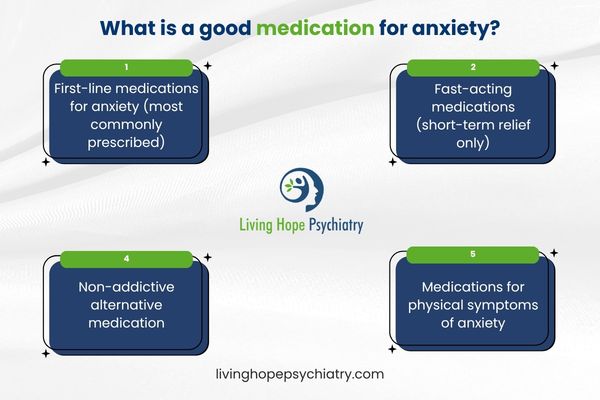
1. First-line medications for anxiety (most commonly prescribed)
SSRIs (Selective Serotonin Reuptake Inhibitors)
SSRIs are usually the first choice for long-term anxiety treatment.
Common examples:
- Sertraline
- Escitalopram
- Fluoxetine
- Paroxetine
How they work:
They increase serotonin levels in the brain, which helps improve mood, reduce excessive worry, and stabilize emotional responses.
Best for:
- Generalized Anxiety Disorder (GAD)
- Panic Disorder
- Social Anxiety Disorder
Important to know:
- Takes 2–6 weeks to show noticeable improvement
- Side effects may include nausea, sleep changes, or mild restlessness at the start
SNRIs (Serotonin-Norepinephrine Reuptake Inhibitors)
SNRIs are another long-term treatment option, especially when SSRIs are not effective.
Common examples:
- Venlafaxine
- Duloxetine
How they work:
They balance both serotonin and norepinephrine, helping regulate mood and stress response.
Best for:
- Chronic anxiety
- Anxiety with depression
- Physical tension related to stress
2. Fast-acting medications (short-term relief only)
Benzodiazepines
These medications work quickly and are used for acute anxiety or panic attacks.
Common examples:
- Alprazolam
- Lorazepam
- Clonazepam
How they work:
They enhance calming signals in the brain, producing rapid relaxation.
Best for:
- Panic attacks
- Severe short-term anxiety episodes
Important warning:
- Can cause dependence if used long-term
- Usually prescribed only for short durations or emergency situations
3. Non-addictive alternative medication
Buspirone
Buspirone is often used for ongoing anxiety management.
How it works:
It affects serotonin receptors without sedation or addiction risk.
Best for:
- Generalized Anxiety Disorder (GAD)
- People who cannot tolerate SSRIs or benzodiazepines
Key point:
- Takes time to work (similar to SSRIs)
- Does not cause dependency
4. Medications for physical symptoms of anxiety
Beta-blockers
These do not treat emotional anxiety but help control physical symptoms.
Example:
-
Propranolol
Best for:
- Performance anxiety (speaking, interviews, presentations)
- Rapid heartbeat, shaking, sweating
How they help:
They block adrenaline effects, reducing visible signs of anxiety.
Important medical guidance
-
Anxiety medication should always be prescribed by a qualified doctor or psychiatrist
-
Treatment choice depends on medical evaluation, not self-diagnosis
-
Many people benefit most from a combined approach: medication + therapy + lifestyle changes
-
Never start, stop, or change dosage without medical supervision
Simple summary
There is no single “best medication” for anxiety. Most treatment plans use:
- SSRIs or SNRIs → for long-term anxiety control
- Benzodiazepines → for short-term or severe anxiety episodes
- Buspirone → for non-addictive long-term management
- Beta-blockers → for physical symptoms like shaking or rapid heartbeat
The most effective treatment is always personalized based on individual symptoms and professional evaluation.
If you are struggling with anxiety, you don’t have to face it alone. Living Hope Psychiatry provides professional anxiety treatment in McKinney, TX, offering personalized care to help you regain control of your thoughts, emotions, and daily life.
Our team takes a comprehensive approach to anxiety treatment, which may include careful evaluation, medication management, and evidence-based therapeutic support tailored to your needs. Take the first step today, schedule an appointment with Living Hope Psychiatry and start your journey toward a calmer, healthier mind