Mental disorders affect how a person thinks, feels, behaves, and interacts with the world. Some conditions are considered especially difficult to live with because they are long-term, emotionally intense, socially challenging, or require ongoing treatment.
Below is a deeper explanation of mental health conditions often described as the most challenging.
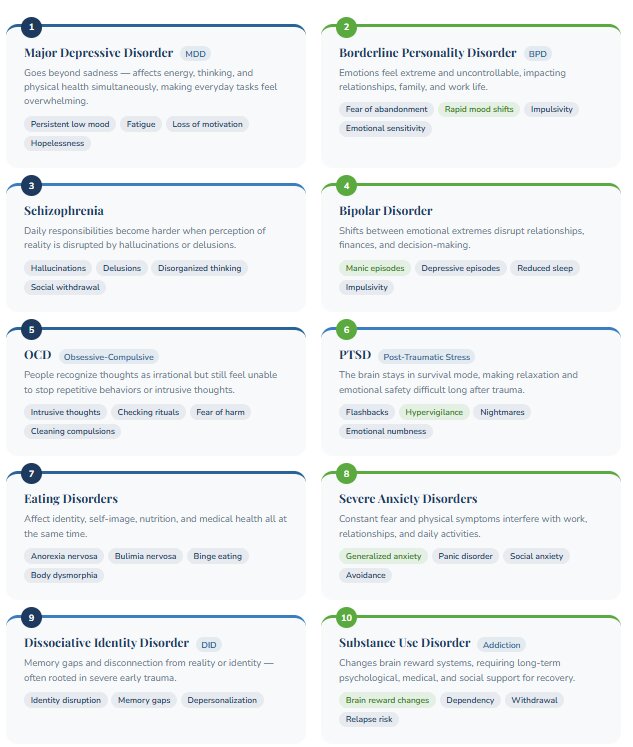
1. Major Depressive Disorder (Clinical Depression)
Major depressive disorder goes beyond normal sadness. Individuals may experience:
- Persistent low mood
- Loss of motivation or pleasure
- Fatigue and sleep problems
- Difficulty concentrating
- Feelings of worthlessness or hopelessness
Why it feels difficult:
Depression affects energy, thinking, and physical health simultaneously, making everyday tasks feel overwhelming.
Treatment options: Psychotherapy, lifestyle changes, medication, and social support.
2. Borderline Personality Disorder (BPD)
Borderline personality disorder involves intense emotional reactions and unstable self-image.
Common symptoms include:
- Fear of abandonment
- Rapid mood changes
- Impulsive decisions
- Relationship instability
- Strong emotional sensitivity
Why it’s challenging:
Emotions can feel extreme and uncontrollable, which may impact friendships, family, and work life.
3. Schizophrenia
Schizophrenia is a severe mental health condition affecting perception and reality.
Symptoms may include:
- Hallucinations (seeing or hearing things others do not)
- Delusions
- Disorganized thinking
- Social withdrawal
Why it’s difficult:
Managing daily responsibilities becomes harder when perception of reality is disrupted.
4. Bipolar Disorder
Bipolar disorder causes alternating mood episodes:
- Depressive episodes: low energy and sadness
- Manic or hypomanic episodes: high energy, impulsivity, reduced need for sleep
Why it’s challenging:
The shift between emotional extremes can disrupt relationships, finances, and decision-making.
5. Obsessive-Compulsive Disorder (OCD)
OCD involves intrusive thoughts and repetitive behaviors aimed at reducing anxiety.
Examples:
- Excessive checking
- Cleaning rituals
- Repetitive counting
- Fear of harm or contamination
Why it’s hard:
People often recognize thoughts as irrational but still feel unable to stop them.
6. Post-Traumatic Stress Disorder (PTSD)
PTSD develops after experiencing or witnessing trauma.
Symptoms include:
- Flashbacks
- Nightmares
- Emotional numbness
- Hypervigilance
- Avoidance behaviors
Why it’s difficult:
The brain stays in survival mode, making relaxation and emotional safety difficult.
7. Eating Disorders
Eating disorders include:
- Anorexia nervosa
- Bulimia nervosa
- Binge eating disorder
These conditions combine psychological distress with serious physical health risks.
Why it’s challenging:
They affect identity, self-image, nutrition, and medical health at the same time.
8. Severe Anxiety Disorders
Anxiety disorders go beyond occasional worry.
Types include:
- Generalized anxiety disorder
- Panic disorder
- Social anxiety disorder
Why it’s difficult:
Constant fear or physical anxiety symptoms can interfere with work, relationships, and daily activities.
9. Dissociative Identity Disorder (DID)
DID involves disruptions in memory, identity, or sense of self, often connected to severe early trauma.
Why it’s challenging:
Individuals may experience memory gaps or feel disconnected from reality or their own identity.
10. Substance Use Disorder (Addiction)
Addiction changes brain reward systems, making substances difficult to stop despite harmful consequences.
Why it’s difficult:
Recovery often requires long-term psychological, medical, and social support.
Why Some Mental Disorders Feel Harder Than Others
Several factors influence how difficult a disorder feels:
- Severity and duration of symptoms
- Impact on relationships and work
- Social stigma and misunderstanding
- Access to mental health treatment
- Co-occurring conditions (anxiety + depression, trauma + addiction)
There is no universal ranking — each person’s experience is unique.
Can People Recover or Live Well With These Disorders?
Yes. Many individuals successfully manage symptoms and lead fulfilling lives through:
- Evidence-based therapy (CBT, DBT, trauma therapy)
- Medication management when needed
- Support systems and community care
- Healthy lifestyle habits
- Early diagnosis and intervention
Mental health conditions are treatable, and improvement is possible.
Key Takeaway
The mental disorders commonly considered hardest to live with include: major depressive disorder, borderline personality disorder, schizophrenia, bipolar disorder, OCD, PTSD, eating disorders, severe anxiety disorders, dissociative identity disorder, and substance use disorder.
Mental illness difficulty depends on individual experience, symptom severity, and support availability. With professional treatment and compassionate care, people can build stability, resilience, and meaningful lives.
If you or a loved one are struggling with anxiety, depression, mood changes, or other mental health challenges, professional support can make a difference.
At Living Hope Psychiatry, compassionate mental health care is provided in a safe, supportive, and confidential environment.
Schedule your appointment today and take the first step toward emotional wellness and lasting healing in McKinney, Texas.