
Manic depression, now called bipolar disorder, is a mood condition marked by emotional highs (mania or hypomania) and lows (depression). While medication is a common treatment, some people look for non-medication strategies due to side effects, personal preference, or as complementary support.
This guide outlines practical, evidence-based ways to manage symptoms safely and effectively.
Can Bipolar Disorder Be Managed Without Medication?
In mild or well-monitored cases, lifestyle strategies and therapy may reduce symptom severity. However:
- Severe mania, psychosis, or suicidal thoughts require medical care.
- Never stop prescribed medication without professional guidance.
- Non-medication approaches work best with structured support.
The goal is mood stability and relapse prevention.
8 Practical Ways to Manage Manic Depression Naturally
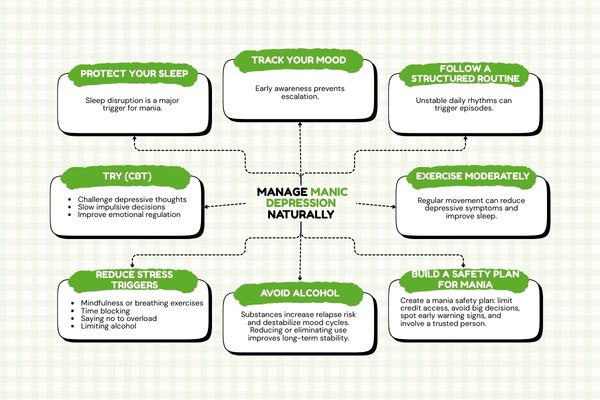
1. Protect Your Sleep (Top Priority)
Sleep disruption is a major trigger for mania.
- Go to bed and wake up at the same time daily
- Avoid screens 1 hour before bed
- Limit caffeine after noon
- Keep the bedroom cool and dark
Consistency matters more than perfection.
2. Track Your Mood Daily
Early awareness prevents escalation.
Track:
- Sleep hours
- Energy levels
- Irritability
- Spending behavior
- Social activity
Review patterns weekly.
3. Follow a Structured Routine
Unstable daily rhythms can trigger episodes.
Create consistency in:
- Meals
- Work hours
- Exercise
- Social time
Predictability supports mood regulation.
4. Try Cognitive Behavioral Therapy (CBT)
CBT helps you:
- Challenge depressive thoughts
- Slow impulsive decisions
- Improve emotional regulation
Therapy is one of the most effective non-drug supports.
5. Exercise Moderately
Regular movement can reduce depressive symptoms and improve sleep.
Best options:
- Walking
- Swimming
- Light strength training
- Yoga
Avoid extreme overtraining.
6. Reduce Stress Triggers
Stress fuels both mania and depression.
Helpful tools:
- Mindfulness or breathing exercises
- Time blocking
- Saying no to overload
- Limiting alcohol
7. Avoid Alcohol and Recreational Drugs
Substances increase relapse risk and destabilize mood cycles.
Reducing or eliminating use improves long-term stability.
8. Build a Safety Plan for Mania
During stable periods:
- Limit credit card access
- Avoid major life decisions when energized
- Identify early warning signs
- Choose a trusted accountability partner
Preparation prevents damage during mood shifts.
When Medication Is Strongly Recommended
Seek medical care if you experience:
- Severe mania
- Psychosis
- Rapid cycling
- Suicidal thoughts
- Inability to function
Natural strategies alone may not be enough in high-risk cases.
Weekly Stability Checklist
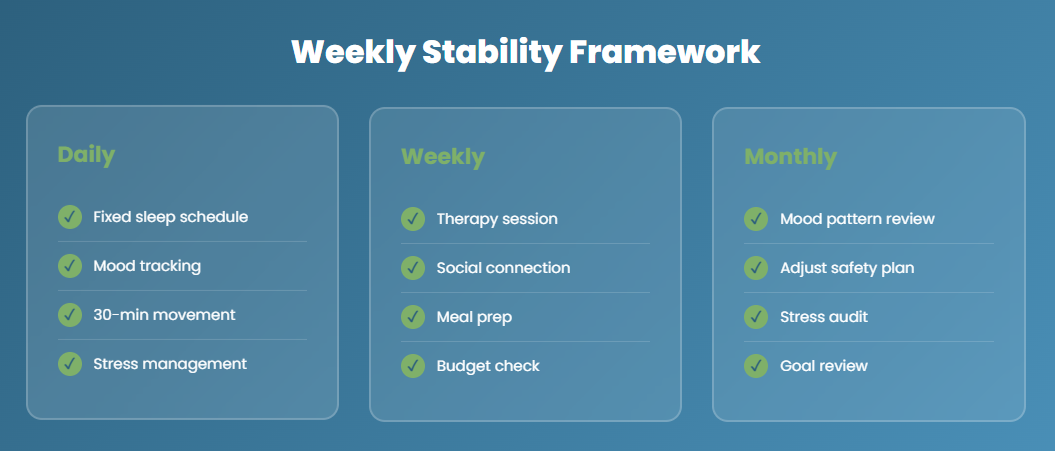
| Daily | Weekly |
|---|---|
| Fixed sleep schedule | Therapy session |
| Mood tracking | Review mood patterns |
| 30 min movement | Budget & impulse check |
| Stress reduction | Social connection |
Consistency creates stability.
FAQs
1. Can bipolar disorder go away without medication?
No. It is a long-term condition, but symptoms can be managed with structured lifestyle habits and therapy.
2. Is it safe to treat manic depression naturally?
It can be for mild cases with supervision. Severe symptoms require professional treatment.
3. What calms mania naturally?
Sleep restoration, reduced stimulation, limiting caffeine, and contacting a therapist early.
4. Does diet affect bipolar symptoms?
Yes. Stable blood sugar, low alcohol intake, and balanced nutrition support mood stability.
5. Can therapy alone manage bipolar disorder?
For some mild cases, therapy may help significantly. Many people benefit from combined treatment.
Summary:
Managing manic depression (bipolar disorder) without medication focuses on:
- Strict sleep routine
- Daily mood tracking
- Structured daily schedule
- Regular moderate exercise
- Stress reduction
- Avoiding alcohol and drugs
- Ongoing therapy and support
These habits can help stabilize mood, but severe symptoms require professional care. Always seek medical help if you experience extreme mania, psychosis, or suicidal thoughts.
If you or a loved one is struggling with mood swings, depression, or bipolar symptoms, you don’t have to manage it alone. Living Hope Psychiatry provides compassionate, personalized mental health treatment in McKinney, TX.
Reach out today to speak with a qualified professional and take the first step toward stability, clarity, and long-term emotional wellness.